
The Global Journey of Fast Fashion’s Discarded Clothes
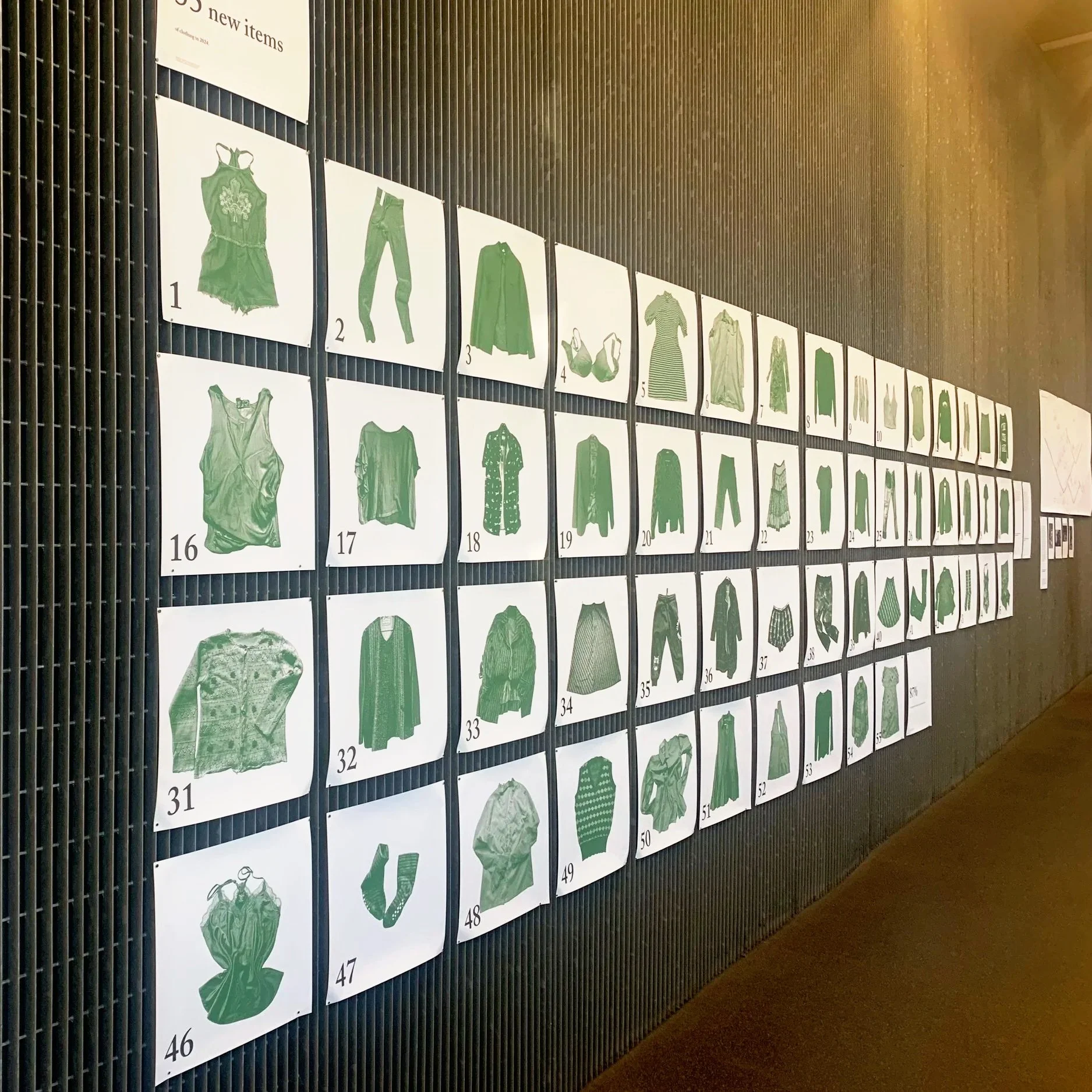
Image by Alexi Freeman
By Alexi Freeman
Article Summary
Fast fashion is driving massive overconsumption, with Australians buying around 56 clothing items per year and contributing to a global textile waste crisis.
Discarded garments often enter complex second-hand markets, with huge volumes ending up in places like Accra, Ghana, where unsellable clothing accumulates in waterways and landscapes.
Researchers argue the real solution lies not just in recycling but in reducing overproduction, adopting circular design and encouraging consumers to buy fewer, longer-lasting garments.
For time immemorial, humans have worn materials shaped by climate, culture and landscape. Clothing has long expressed identity, belonging, and connection to place.
Ancient storytelling and archaeological artefacts point to humanity’s enduring relationship with fibre.
In the biblical story of Adam and Eve, fig leaves are stitched together after leaving Eden – an early depiction of humans designing the natural world into textiles.
Millenia later, the archaeological record echoes this impulse. The world’s oldest known garment, the Tarkhan Dress, is a finely woven plant-based garment carbon-dated to more than 5,000 years ago.
For thousands of generations, textiles were scarce and precious; garments were made slowly, repaired, reused, and returned to the natural systems from which they came.
Today, our harmonious relationship with Nature is being radically altered by our seemingly insatiable hunger for fast fashion.
Australians are the world’s largest textile consumers, buying 56 clothing items each per year. Globally, 97 million tonnes of textile waste are produced annually. In Australia, 600,000 tonnes are sent to landfill.
At a recent panel discussion and exhibition hosted by RMIT’s Textile Terrains Research Group, researchers, policy thinkers and activists examined how the complex flows of discarded clothing is reshaping global landscapes.
As economic geographer Taylor Brydges noted during the discussion, “when we’re thinking about networks across borders, what’s really striking is the complexity of these supply chains.”
Many donated clothes enter global resale networks, before accumulating in waterways, and informal landfills — culminating in what researchers have coined textile terrains.
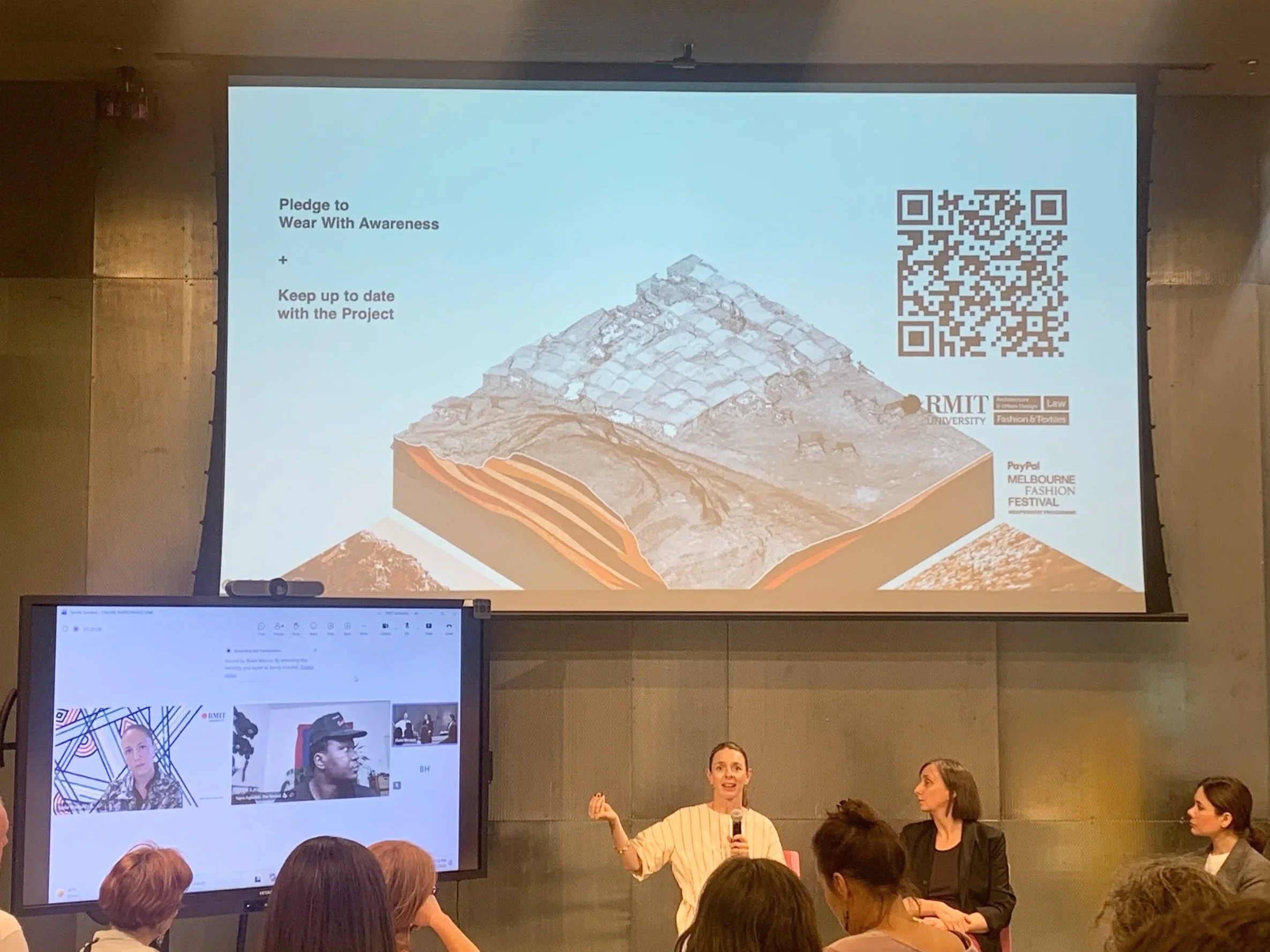
Image by Alexi Freeman
Appetite for Consumption
To frame how these terrains form, Professor Alice Payne – Dean of the School of Fashion and Textiles at RMIT – described the industry as an ever-expanding global system.
“To take a macro view, we are concerned with how to understand and bring to life what is a world-spanning system of fashion and textiles,” Payne said. “One that is hungrier all the time for more oil, more fibre, plants, animals, resources, labour and intangible creative ideas that eventually become physical goods.”
Every garment carries embodied energy — the labour, materials and resources required to produce it.
Yet the breakneck pace of contemporary fashion means these inputs are moving through the use phase at unprecedented rates.
“Our research asked how we visualise and express this overproduction, overconsumption and the sheer speed and volume through which materials flow through this global system,” Payne explained.
The Textile Terrains project brings together researchers from fashion and textiles, landscape architecture and law, using mapping, satellite imagery and field documentation to trace the journeys garments take long after they leave shop floors and wardrobes.
Brydges described fashion as part of a vast global production network in which different regions play very different roles.
“Decisions made in design studios, sourcing offices and boardrooms in places like Australia or North America don’t just stay there,” she said. “They reverberate outwards into manufacturing regions, shipping routes and ultimately into the second-hand markets we’ve been discussing.”
The result is an unbalanced system where economic value and environmental cost are drastically lopsided.
“Value tends to accumulate at the top of the chain with brands and retailers,” Brydges explained, “while the material risk and waste are pushed downward and outward.”
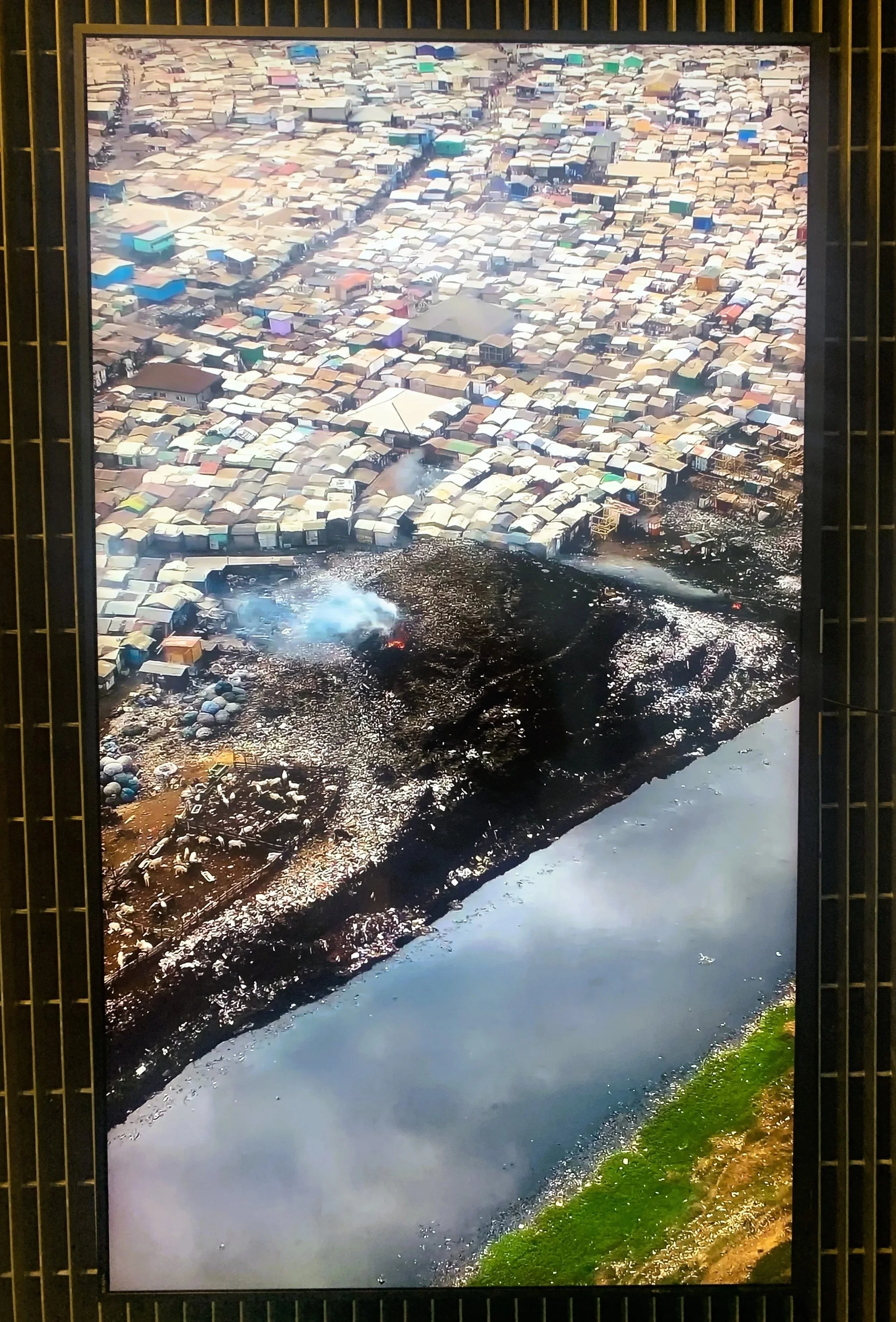
Image by Alexi Freeman
Textile-scapes
Nowhere are fashion’s global flows more visible than in Accra, Ghana.
Kantamanto Market — the world’s largest second-hand clothing hub — receives 15 million garments each week from heavy fashion-consuming regions including Europe, North America and Australia.
Traders purchase tightly packed bales hoping to resell the contents in local markets, where garments are sorted and sold by category, from women’s wear to children’s clothing.
This system is increasingly overwhelmed by sheer volume, exacerbated by a decline in garment quality. According to Ghanaian designer and activist Yayra Agbofah, founder of the community-led sustainable design NGO The Revival, around 40 per cent of clothing arriving in Kantamanto cannot be sold.
Those unsellable garments do not magically disappear. Instead, they accumulate across the city’s landscape — clogging drainage systems, washing into waterways and gathering along the coastline.
Through drone imagery, terrain modelling and on-the-ground documentation in Accra, researchers from the Textile Terrains Research Group are tracing how discarded clothing moves through the city and into surrounding ecosystems.
For Agbofah, the crisis ultimately begins far from Ghana’s shores where there is a cultural tradition of keeping garments as heirlooms.
“There are clothes that cost less than a cup of coffee,” he said.
“Consumers must shift from fast fashion to responsible conduct. We must shift to value, repair, reuse and long-term ownership.”
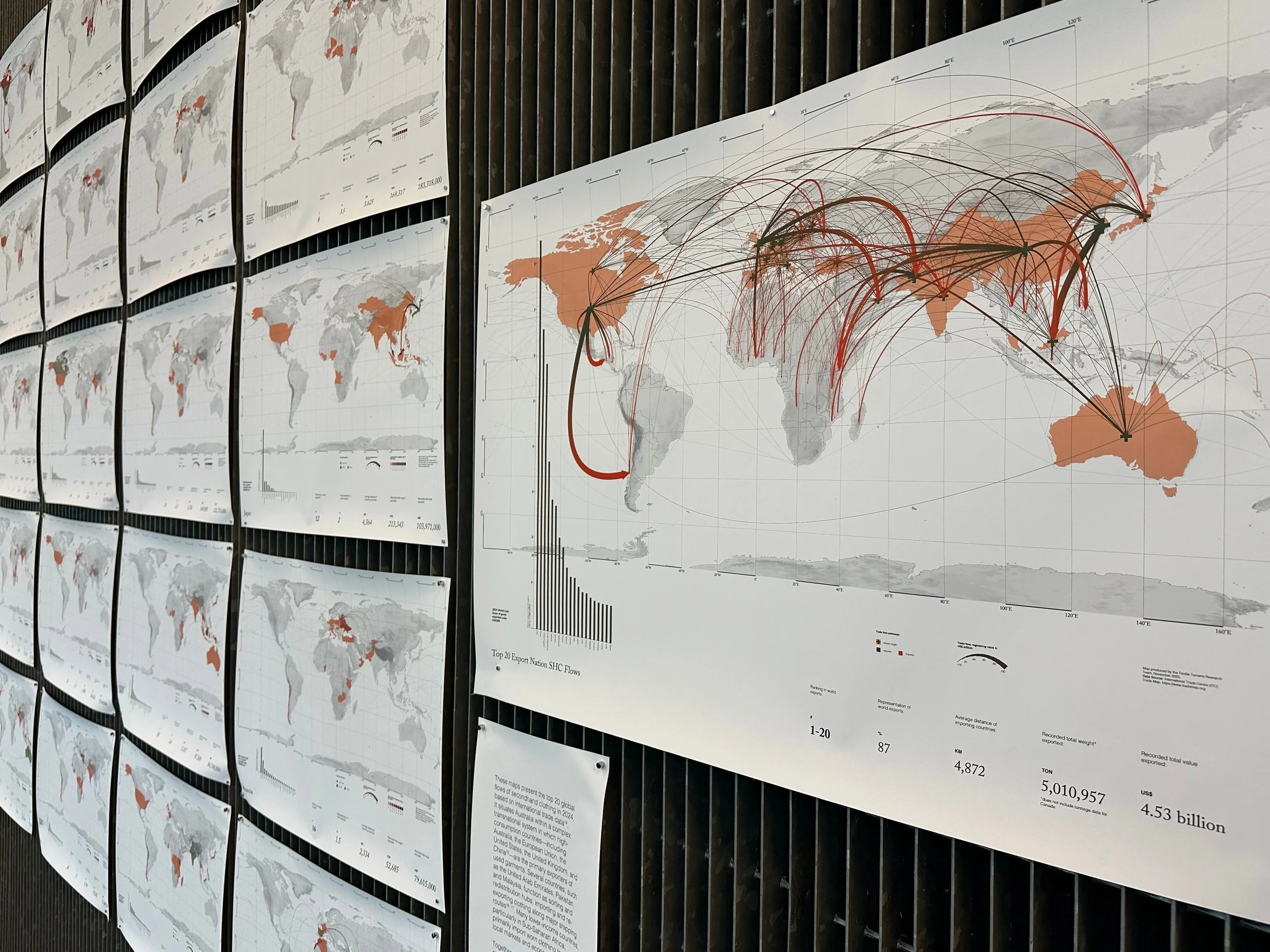
Image by Alexi Freeman
Arcing Toward a Circular Future
While the Textile Terrains project reveals the downstream consequences of fashion waste, some panellists focused on how change might begin much earlier — at the point of design and production.
Panellist Danielle Kent, General Manager of Industry Transformation at Seamless — Australia’s national clothing stewardship scheme — explained that the sector has only recently begun confronting its waste problem.
“About five years ago, clothing became one of the waste priority products for the Government,” Kent said. “It was identified as something the industry needed to pay attention to.”
Supported by a $1 million grant from the Department of the Environment, Seamless was commissioned to transform clothing manufacturing, use, reuse and recycling in Australia.
“We purposefully designed the scheme to be circular,” Kent explained. “This isn’t just about the downstream waste problem. It’s about thinking about those points of intervention upstream as well.”
That means examining the design decisions embedded in every garment.
“What are the decisions made at the design stage that affect its end of life?” Kent said. “Fibre type, recycling pathways, decommissioning requirements — things designers have never really thought about before, but which become critical in circular design.”
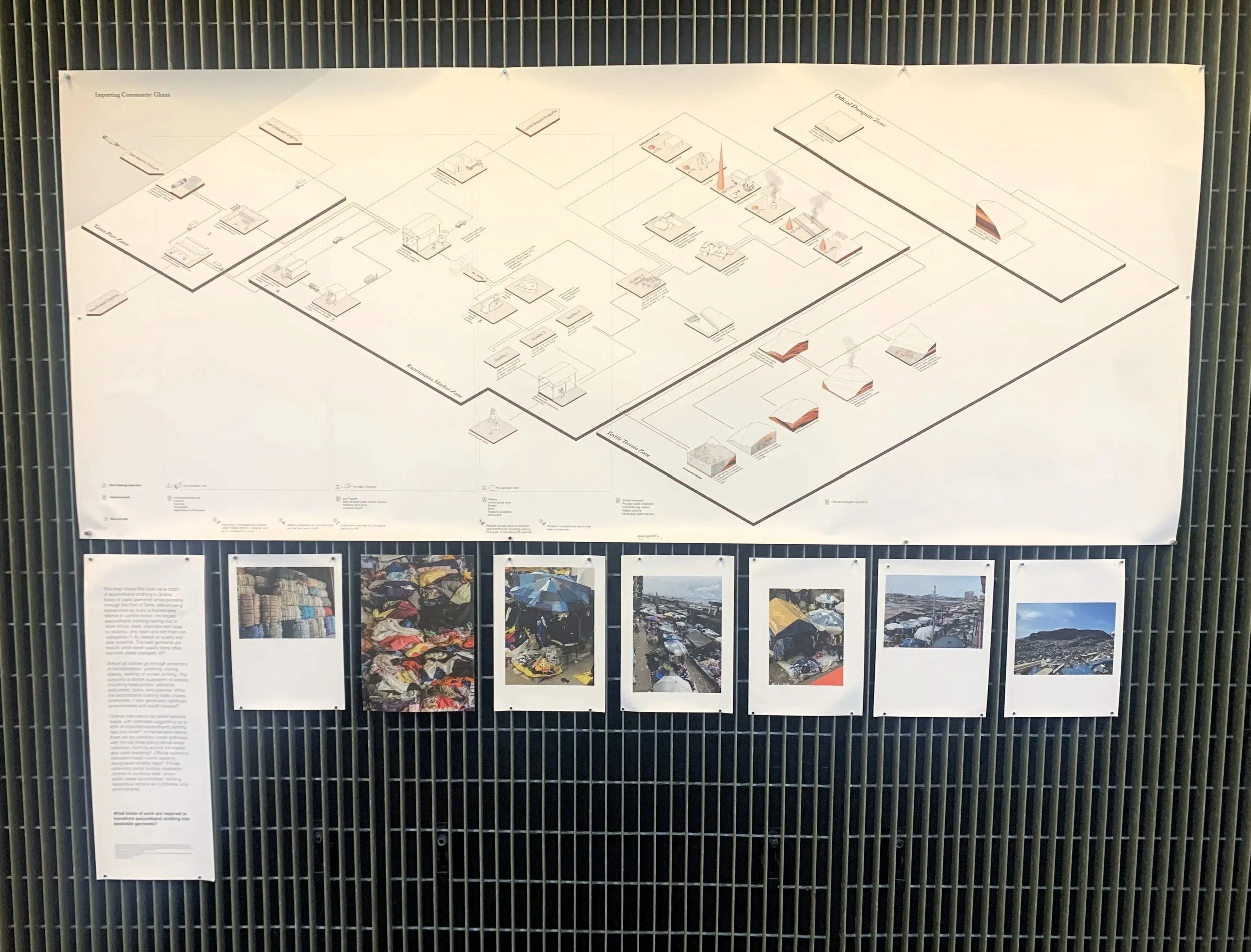
Image by Alexi Freeman
Buying Less, Doing More
For decades, the waste-management end of the fashion industry has focused on recycling technologies, resale markets and circular initiatives designed to keep garments and material value in circulation.
But the Textile Terrains researchers argue these strategies address only part of the problem.
At the centre of the issue, Brydges suggested, is sheer overproduction. “The global fashion system is producing far more clothing than primary markets — or even our individual closets — can absorb,” she said.
Second-hand markets have increasingly become what Brydges describes as “a kind of pressure valve,” absorbing surplus garments and extending their life in local economies.
While this trade supports livelihoods and skills in many communities, the environmental burden of overproduction does not disappear — it is simply displaced.
And that displacement is profoundly uneven.
“The countries and communities least responsible for the scale and speed of production are often the ones managing its afterlife,” Brydges said.
As the panel suggested, making hidden geographies visible is a crucial step toward remediating the landscapes of the regions most impacted by our textile consumption.
After tracing the remarkably complex journey of clothing through global production, use and waste systems, perhaps the most effective solution may also be the most glaringly obvious — making the courageous decision to buy less.
Key Information:
“Textile Terrains: the hidden geographies of fashion overconsumption” was presented by the Textile Terrains Research Group, supported by an RMIT Enabling Impact Grant, as part of the Paypal Melbourne fashion Festival Independent Programme.
Building 100 (Design Hub) - RMIT University, Carlton, VIC Friday, Feb 20 from 6 pm to 7:30 pm
Panelists:
- Professor Alice Payne (RMIT University)
- Associate Professor Taylor Brydges (RMIT University)
- Danielle Kent (Seamless, Australian Clothing Stewardship)
- Yayra Agbofah (The Revival, community-led sustainable design NGO based in Ghana)