
Density Done Well: How Victoria Can Build Connected Communities, Not Just Houses
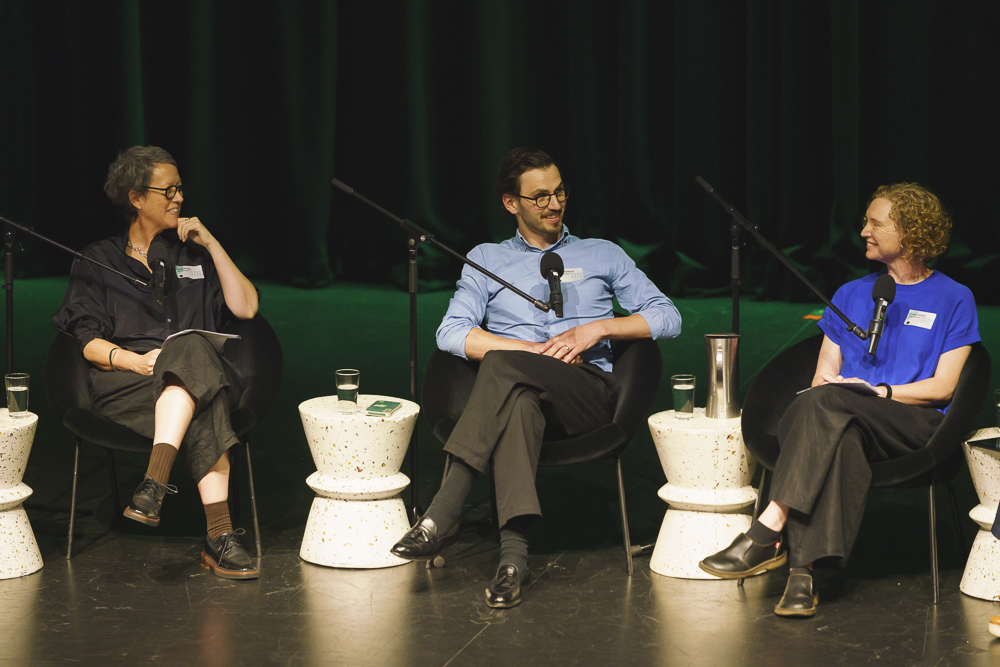
(LtoR) Associate Professor Sarah Foster, ARC Future Fellow in the Centre for Urban Research at RMIT University, Dr Hugh Stanford, Research Fellow in the Centre for Urban Research at RMIT University, and Dr Emma McCrae, Research Fellow in the Centre for Urban Research at RMIT University. Photo by MJ Bentley.
By Alexi Freeman
Article Summary
- While Victoria faces immense pressure to increase housing supply, simply adding new dwellings fails to build connected communities if it ignores essential infrastructure, green spaces, and local established character.
- Research comparing thousands of apartments reveals that strong planning policies are critical because private markets rarely deliver quality design standards that significantly enhance resident wellbeing and urban liveability.
- Local leaders must prioritise listening closely to communities early, respecting Indigenous knowledge systems, and coordinating physical infrastructure alongside social amenities to ensure growing neighbourhoods truly flourish together.
A neighbourhood is a living thing, but it’s hard to pinpoint what gives it a pulse.
Perhaps it's the towering eucalypt shading the footpath, the daily chorus of birdsong, the park where children play after school, and the tram screeching around the corner.
It’s also the neighbours who look out for one another as their lives unfold.
Victoria is under pressure to put roofs over people's heads, but adding dwellings isn’t the same as building more connected communities.
A new apartment building can bring additional neighbours without necessarily providing more places to gather, trees to shelter beneath, or public transport to connect people with work and the wider community.
New dwellings are easy to count; the social and cultural value of established neighbourhoods is harder to put a figure on. Urban growth is too often measured in dollars rather than sense.
Poorly planned growth can leave infrastructure playing catch-up, reduce access to green space and displace residents from neighbourhoods where they have put down roots.
The challenge is to make room for more people without losing sight of what makes a neighbourhood worth living in.
At RMIT University’s Local Leadership for Density Done Well symposium, researchers, planners and local government leaders explored how policy, design and evidence can guide change toward more liveable neighbourhoods.
The event also launched a co-authored report on building community support for density. Its Knowledge for Density panel brought together four researchers from RMIT’s Centre for Urban Research, moderated by the Centre’s director, Professor Libby Porter.
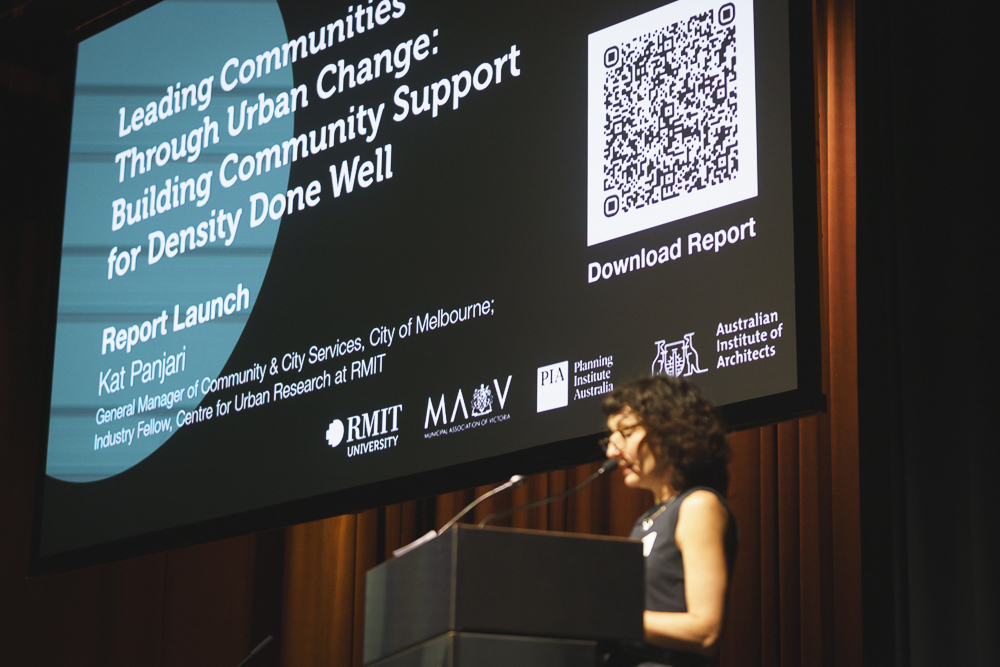
Kat Panjari, General Manager of Community and City Services at the City of Melbourne, speaking at the symposium. Photo by MJ Bentley.
Designing for Liveability
Associate Professor Sarah Foster, an ARC Future Fellow, examined how apartment design affects residents' wellbeing.
Her research compared around 10,000 apartments across Melbourne, Sydney and Perth, assessing how well buildings met design-policy requirements and surveying residents about their wellbeing.
Of the buildings studied, 86% in Sydney fell into the high-performing group, compared with 9% in Melbourne. Residents in better-performing buildings reported significantly higher wellbeing.
“You could say that without an aspirational planning policy, you are unlikely to get good design on its own,” Foster said.
“The market doesn't appear to deliver it without some sort of minimum standard in place.”
Her research also linked undersized apartments with poorer wellbeing, underscoring the consequences of falling short on design standards.
Research Fellow Dr Emma McCrae shared insights from conversations with residents in Niddrie and Bendigo, with research also beginning in Tarneit.
Participants described priorities ranging from public transport and safer streets to affordable housing, walkability and opportunities to bring vacant buildings back into circulation.
“The key thing we've been hearing from participants is the need for the delivery of housing to be very much aligned with the delivery of infrastructure, both social and physical infrastructure,” McCrae said.
In Bendigo, participants valued neighbourhoods where grandparents could afford to live near younger family members as their circumstances changed over time.
Listening to what residents need over a lifetime, not just in their current circumstances, can help urban planners give more people a fair go.
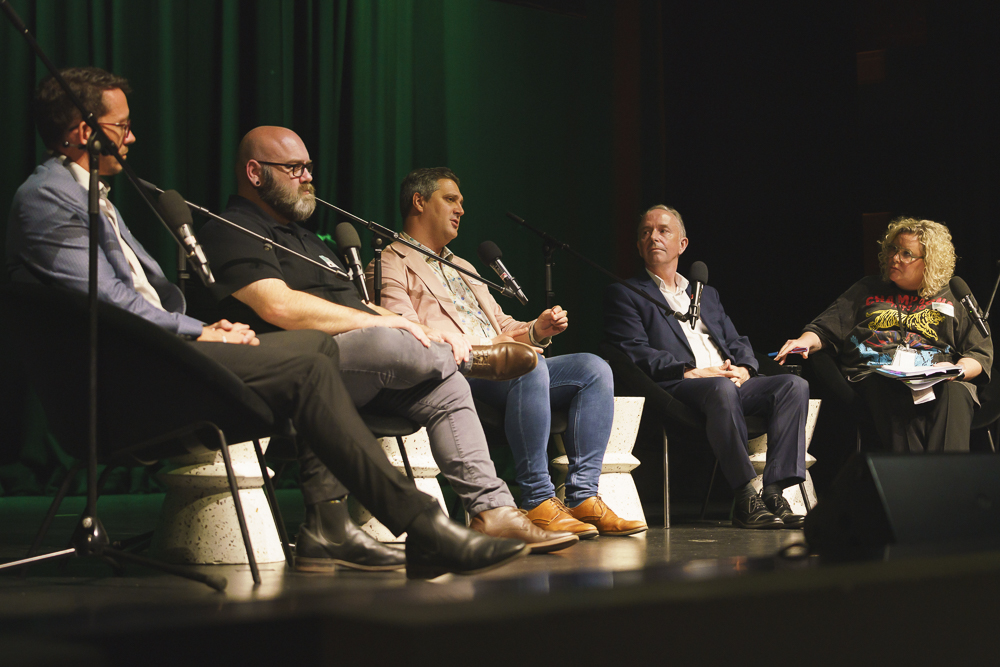
(LtoR) Councillor Thomas Prince, Mayor of the City of Greater Bendigo, Shaun Middlebrook, Principal First Nations Advisor at the Australian Housing and Urban Research Institute, Councillor Alex Makin, Mayor of the City of Port Phillip, Simon McMillan, Chief Executive Officer of Whitehorse City Council, and Kelly Grigsby, CEO of the Municipal Association of Victoria at RMIT University. Photo by MJ Bentley.
Beyond the Dwelling
Research Fellow Hugh Stanford uses aerial imagery and spatial data to track changes in Australian cities, from housing patterns to the loss of tree canopy.
Stanford’s research challenges the idea that the so-called missing middle — housing between detached houses and larger apartment buildings — is simply missing.
Townhouses and duplexes already exist but are often concentrated in inner-city areas or scattered across individual lots without coordinated transport and infrastructure.
“We need housing supply,” Stanford said, “but housing supply to its own end is not what we need. We need liveable cities. We need healthy access to public transport and trees and all those other things.”
Even small developments can leave a large mark.
Replacing a house on a quarter-acre block with a multi-residential development can mean losing established trees and replacing permeable ground with hard surfaces.
Each isolated change may seem minor, but cumulative losses can contribute to hotter local microclimates, particularly where tree cover is limited.
A sapling takes many years to provide the shade of a mature tree, and once the canopy is gone, it won't grow back overnight.
Professor Melanie Davern, director of RMIT’s Australian Urban Observatory, painted a more panoramic picture.
The Observatory measures neighbourhood liveability across Australian cities, helping councils understand how access to transport, services and other amenities varies between places.
“We see huge inequities in the mobility of our cities,” Davern said.
“The inner areas of our cities do so much better in terms of liveability. And we see the inequity of the outer areas.”
She argued that healthy neighbourhoods need far more than housing and essential infrastructure, including libraries, good transport and “more beautiful big green spaces for people to congregate.”
“These things are so important for community creation, not just the delivery of infrastructure,” Davern said.
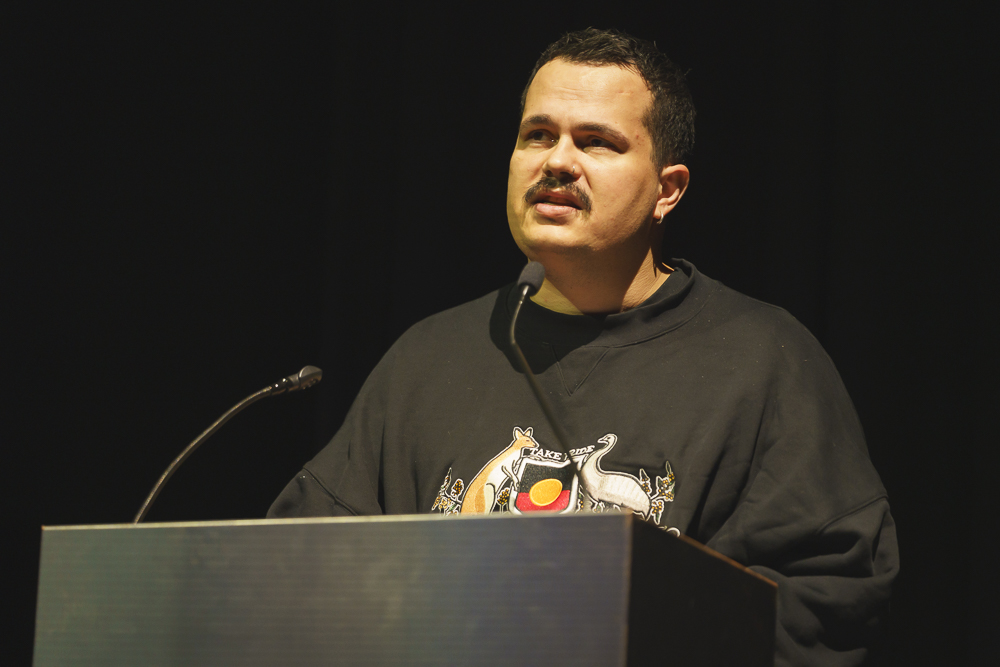
Wurundjeri man Thane Garvey speaking at the symposium. Photo by MJ Bentley.
Translating Evidence Into Action
Research matters, but its real value lies in what happens on the ground.
The evidence points to practical ways forward: design standards that support residents' wellbeing, development shaped by what communities say they need, and better ways to track how neighbourhoods shift over time.
Closing the symposium, Porter emphasised the importance of understanding place and history, listening to communities early, respecting First Peoples’ knowledge systems and building partnerships that put people and place at the heart of urban change.
“The importance of governing from place and with place — that is, listening closely, acting early, understanding context and history, who is there, and meeting people where they are — this is integral to the role of local leadership for doing density well.”
She also stressed that design should be treated as a fundamental need rather than an expensive afterthought and that housing shortages must be considered alongside climate change.
Density Done Well isn’t about Tetris-ing as many dwellings as possible onto a block.
It’s about designing new homes alongside trees, shared spaces, transport and everyday connections that help a neighbourhood to flourish.
The seeds of change have been planted; the challenge is to help them grow.
For local leaders, that means making room for more people to live well and welcoming new neighbours without squeezing existing communities until they no longer feel they belong.
Local Leadership Done Well symposium
Thursday 22 October 2026, 9.30 am - 4 pm The Capitol, 113 Swanston St, Melbourne
Presented by RMIT University’s Centre for Urban Research and College of Design and Social Context, in partnership with the Municipal Association of Victoria, Planning Institute of Australia and Australian Institute of Architects Victorian Chapter.