
Inside Australia’s New Agrifood Powerhouse on the NSW Northern Coast

Photo by Emily Blake on Unsplash
By Daniel Vlahek
Article Summary
The Coffs Agrifood Living Lab (CALL) aims to transform Coffs Harbour from a raw-produce hub into an advanced food innovation powerhouse.
Key recommendations include a shared Food Innovation and Logistics Precinct and an independent Agrifood Network to aggregate local value.
Long-term success relies on workforce upskilling and cross-sector collaboration modeled on global living labs.
When people think of food innovation, they often picture high-tech automated glasshouses or sterile laboratories.
The northern coastline of New South Wales rarely comes to mind.
Yet situated between the Great Dividing Range and the Tasman Sea, Coffs Harbour is quietly proving to be one of Australia's premier agrifood powerhouses.
Thanks to its ideal microclimate and geography, local farmers can harvest year-round.
However, the region faces growing challenges from freight disruptions, climate change, and tight retail margins.
To address these issues, Future Food Systems partnered with the City of Coffs Harbour and Queensland University of Technology (QUT) in 2023 to launch the Coffs Agrifood Living Lab (CALL). This initiative turns the regional food system into an open-air laboratory to develop new products, improve operations, and help the region reach its full potential.
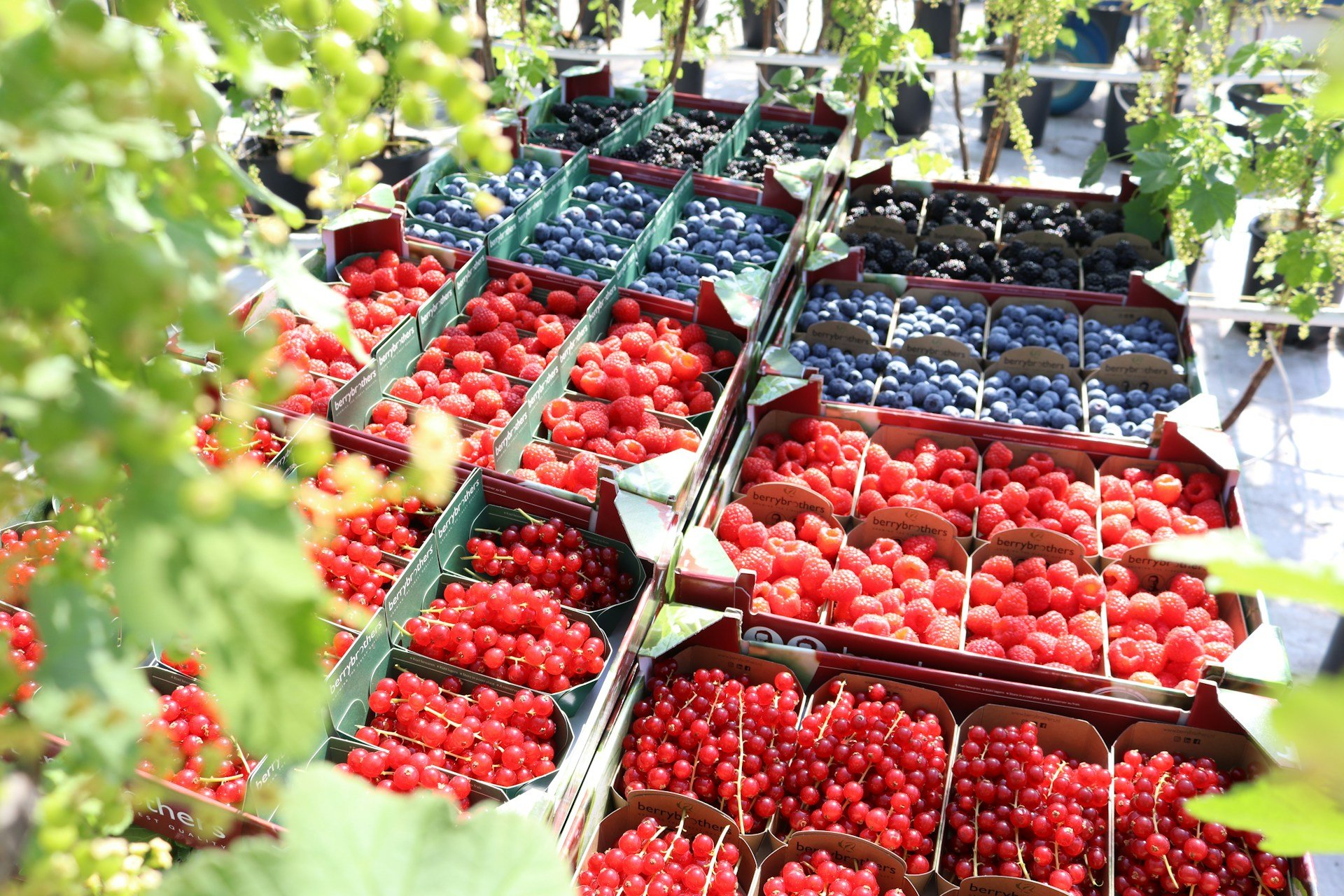
Photo by Teun van Zuilen on Unsplash
The Root of a (Food) System Bottleneck
Before the project launched, Coffs Harbour laid claim as Australia’s undisputed berry producer, supplying 55% of Australia’s total blueberry market, including a smorgasbord of other agrofood products, from seafood, greens, nuts and honey.
Yet, the region hit a snag when high raw-produce volume failed to translate to local economic wealth.
QUT led a diagnostic study of the key bottlenecks that impede the wider ecosystem from moving forward.
What revealed itself was not poor growing conditions — on the contrary, rich natural assets, agricultural diversity and a strong farming heritage laid claim to the region's $744 million local sales output.
“Coffs Harbour has a long history in the agrifood industry, and…the region holds great potential for further growth,” says Dr Ozgur Dedehayir, Project Leader of the CALL initiative.
However, difficulties lay in its place-based challenges to grow, innovate and capture value more locally.
One of the biggest challenges was connectivity.
Many producers, businesses, researchers, and support organisations operate independently, making it difficult to share knowledge, coordinate efforts and pursue regional opportunities at scale.
Practical barriers were present also. Without dedicated local cool rooms or processing facilities, growers are forced to play commercial roulette at markets.
As one operator observed in QUT’s report, “Basically, Coffs Harbour’s product is being sent off on a whim that it might make more money down there than it will up here.
“It’s a massive gamble because you’re getting the big guys in the industry — they’re basically waiting for the market to crash or be in an absolute glut before they’ll purchase, then they’ll purchase something that’s usually $16 a kilo for $3 a kilo, process it, freeze it, box it, done and then sell it for the price as if they bought it for $16 a kilo”.
Photo by Tom Brunberg on Unsplash
Delivery of New Streams
While the CALL project has technically concluded, the project has delivered a business case and a structural blueprint to build on Coffs’ successes to propel it into the future.
One of those outlined initiatives includes the development of a Food Innovation and Logistics Precinct which will serve as a shared, multi-tenant manufacturing and distribution hub, co-located at the Airport Enterprise Park.
This will enable local stakeholders to access cold-chain storage, sharing processing lines and air freight links instead of individually financing multi-million dollar kitchens or blast freezers.
Other streams of development also include future-proofing the local economy by moving cluster governance away from overworked council divisions into a dedicated commercial entity - an independent Agrifood Network.
Using the Central Coast Food Innovation Region Initiative (CCFRI) as a model, this independent entity could conduct, coordinate, manage, and promote initiatives for the local agrifood ecosystem under three unique banners: advocacy, market development and product development.
In the long term, it would coordinate grants, navigate complex export compliance, aggregate buying power, and support the growth of Coffs Harbour's own unique food brand.
Photo by Kunal Kalra on Unsplash
Beyond Infrastructure: People, Skills and Belonging
Whilst investing in agrifood infrastructure is important of course, it will all be for nought if investment is not made into its people either.
A thriving food ecosystem has always been anchored by its workforce, future industry leaders and pathways that help build people’s careers within a region.
With the agriculture sector undergoing a massive exodus in recent times, driven by demographic shifts, wages, and ongoing policy changes, mapping and supporting structured local and regional pathways will be critical.
International food bowls with adjacent issues — such those in the Netherlands — have shown what success looks like within this category.
Partnering with multinationals, startups and local growers, Wageningen University & Research (WUR) established the Food Academy Navigators (FAN). Working with vocational institutions and specialist trainers, they were able to create targeted vocational curriculum and upskilling pathways to plug the capacity gap within their region.
Similarly, The Lab@AgStart in the Sacramento Region of California have also created a living lab model, providing low-cost access to local farmers and Agtech entrepreneurs looking to commercialise novel foods, plant extracts and value-added ingredients.
They also invested into building capacity by partnering with University of California and regional community colleges, providing formal entrepreneurial mentorship, technical certifications and workforce programs to help upskill workers towards bio-manufacturing and specialised food processing.
Photo by Illia Bondar on Unsplash
Joining A Global Movement
Building a resilient food system is not the work of any single organisation or project.
It's a continuous process that brings together multiple partners and entities in a shared vision.
Piggybacking off efforts seen across the US and Europe, CALL aims to do something similar, albeit for the first time in Australia.
“I think there’s an opportunity, a fantastic opportunity, for culinary tourism and agritourism because we do have just a beautiful part of the world and there is opportunity to work on and volunteer,” a project interviewee noted.
Ultimately, the CALL project underscores a vital truth: regional communities hold the intrinsic knowledge and vision to shape their own futures.
By uniting local producers, researchers, and industry leaders under a shared mission, Coffs Harbour is poised to transcend its role as a primary producer and pioneer a resilient, high-value agrifood ecosystem for Australia and beyond.