
Climate Change and Indigenous Rights: How Rising Seas and Extreme Weather Threaten Country
By Daniel Vlahek
Article Summary
Climate change is already causing unprecedented and irreversible impacts globally, with Aboriginal and Torres Strait Islander communities in Australia facing disproportionate harm despite contributing least to emissions.
Rising seas, extreme weather, and ecosystem disruption threaten Indigenous lands, livelihoods, and cultures, leading to landmark human rights action such as the Torres Strait 8 case against the Australian Government.
Protecting Country is central to Indigenous wellbeing, and combining Indigenous knowledge with Western science is critical for fair, effective climate action and adaptation.
Worldwide, the effects of climate change are scarily real.
From increased bushfire severity across Mediterranean Europe to more intense hurricanes across the Atlantic, Earth's systems are now acting in harsher, more extreme ways.
In Australia, rising average temperatures have increased the frequency and intensity of heatwaves in northern and inland areas. Sea levels also continue to rise, compromising the integrity of low-lying and coastal communities.
The Intergovernmental Panel on Climate Change’s (IPCC) Sixth Assessment Report Climate Change 2023 (AR6) states that the scale of recent changes across the whole of the climate system is unprecedented.
Furthermore, these rapid changes due to past and future greenhouse gas (GHG) emissions have been highlighted as being ‘irreversible’ over centuries to millennia, especially changes to the ocean, ice sheets and global sea level.
Vulnerability of Indigenous Australians
Impacts are a present-day reality for many Aboriginal and Torres Strait Islander communities in regional and remote areas.
Although such communities contribute the least in GHG emissions, climate change disproportionately affects them more than any other population due to pre-existing vulnerabilities and exposure.
The IPCC states that differences in exposure and vulnerability are expressed through levels of wealth and education, disability and health status, as well as gender, age, class, and other social and cultural characteristics.
As recorded, First Nations Australians have been marginalised through historical processes of colonialism, dispossession, segregation and assimilation policies. This dispossession of traditional land, culture and knowledge has led to a raft of adverse effects and hardship that is still affecting their community to this day.
Climate change exacerbates this, and with their close proximity to vulnerable geographical areas, First Nations are witnessing its effects in real time, illustrated in several locations across Australia.
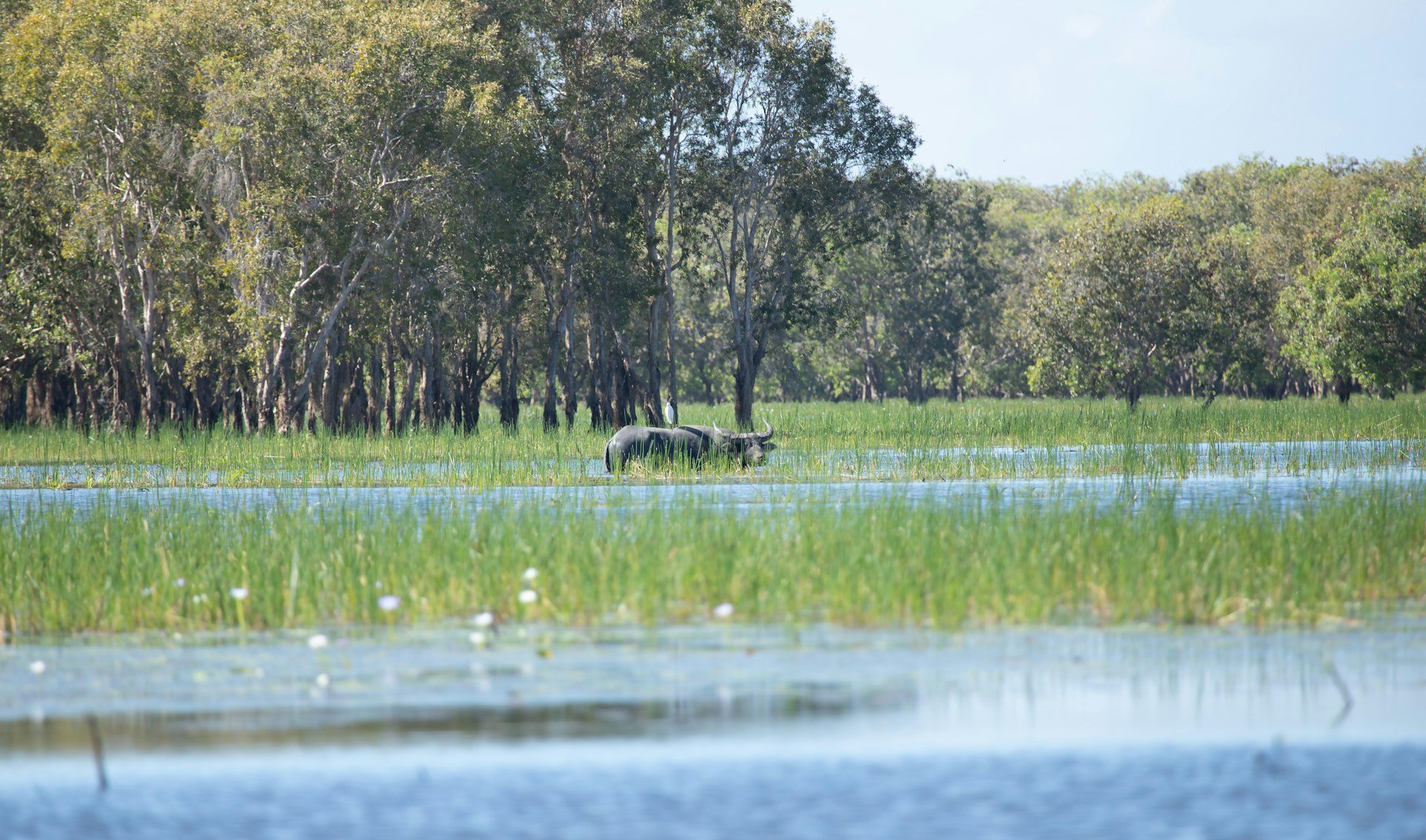
Gurruwiling, also known as the Arafura Swamp, is a vast wetland surrounded by a catchment extending from Castlereagh Bay to the upper reaches of the Goyder and Glyde Rivers in Arnhem Land.
Yolŋu, Bininj and Rembarrnga peoples are its caretakers and are already seeing the intrusion of saltwater into freshwater ecosystems, leading to habitat contraction.
Not too dissimilar, the Biniji/Mungguy people of Kakadu rely not only on their freshwater wetlands for sustenance but also on the tourism and recreation they bring. With changes in rainfall patterns and seasonality, flooding events are becoming more common, increasing biological threats to local flora and fauna.
And with climate change projections already indicating warming beyond 1.5 degrees will happen despite mitigation, these communities will continue to be exposed to more severe weather events for years to come.
Land as a Human Right
In 2008, the Australian Human Rights Council (AHRC) utilised the Native Title Report to advocate for stronger First Nations' rights, highlighting that previous government rule had led to a severe degradation of First Nations' rights and their relationships with traditional lands.
Climate-induced displacement is increasingly recognised as the "single greatest threat" to the livelihoods and security of First Nations people, even more so to the Torres Strait Islanders who populate Zenadh Kes.
With rising tides, erosion, inundation and coral bleaching, eight Torres Strait locals in 2019 brought a human rights complaint against the Australian Government to the United Nations Human Rights Committee (UNHRC) over the Government’s inaction on climate change. Known as the #TorresStrait8, they made legal history in 2022 after the UNHRC found that the Australian Government is violating its human rights obligations to Torres Strait Islanders by failing to act on climate change.
This ruling is now being used by other indigenous communities, in particular Pacific nations, as a powerful diplomatic lever to argue that climate inaction constitutes a breach of their human rights.
Leaders across Vanuatu, Fiji and Tuvalu have cited the case in speeches to the UN General Assembly, demanding stronger emissions cuts from high‑polluting nations. This has directly supported Vanuatu’s successful campaign to secure an advisory opinion from the International Court of Justice on states’ climate obligations.
At COP27 and COP28, Pacific negotiators referenced the ruling when pushing for the Loss and Damage Fund, highlighting that the UNHCR had recognised climate harm to Indigenous communities.
The decision also strengthened calls for culturally grounded adaptation funding, such as Fiji’s community‑led relocation program and Kiribati’s efforts to protect customary land tenure under rising seas.

Connection to Country
These claims go beyond protecting the native fauna and flora of each nation's respective land; rather, they aim to address the most insidious effect of climate change - the loss of ancestral land.
First Nations' deep, spiritual ties to Country — the traditional lands and waters of Aboriginal and Torres Strait Islander peoples — are a keystone for their survival, as they are a fundamental determinant of the community's health, identity, knowledge systems and cultural practices.
Over generations, Aboriginal and Torres Strait Islander people have been the caretakers of Country, enhancing biodiversity, maintaining habitat, and supporting ecosystem resilience. In return, Country has nourished Aboriginal and Torres Strait Islander people physically, mentally, spiritually, and culturally.
This way of thinking and being is a major departure from the dominant ‘Western’ knowledge view, which sees our environment more as a resource than as a relational body.
In climate action planning and research, indigenous perspectives have generally been overlooked or undervalued, despite millennia of accumulated knowledge.
Interestingly, it’s through these complex socio-environmental issues that present us with a unique opportunity for ‘two-way seeing’ - the weaving of indigenous knowledge with western science to inform future mitigation and adaptation approaches.

What Can We Do?
Greenhouse gases at current rates will mean that we will eclipse the 1.5 degrees within the next few years. Still, there is much we can do, such as:
- Support climate justice: Advocate for climate finance that provides grants, not loans, to vulnerable nations. It is a matter of equity that those who contributed the least to the crisis receive the support they need to survive it.
- Amplify Indigenous knowledge: Listen to the stories of the Vanua and the Te Fenua from Polynesia and Fiji. Their centuries-old wisdom on environmental stewardship is a resource the entire world needs.
- Local action, global impact: Every step we take to reduce our carbon footprint, every letter we write to our representatives, and every conversation we have about climate justice helps buy time for these low-lying communities.
It's up to us to raise their voice and collaborate with each other to realise a better tomorrow.