
Big Ideas from the Hollywood Climate Summit
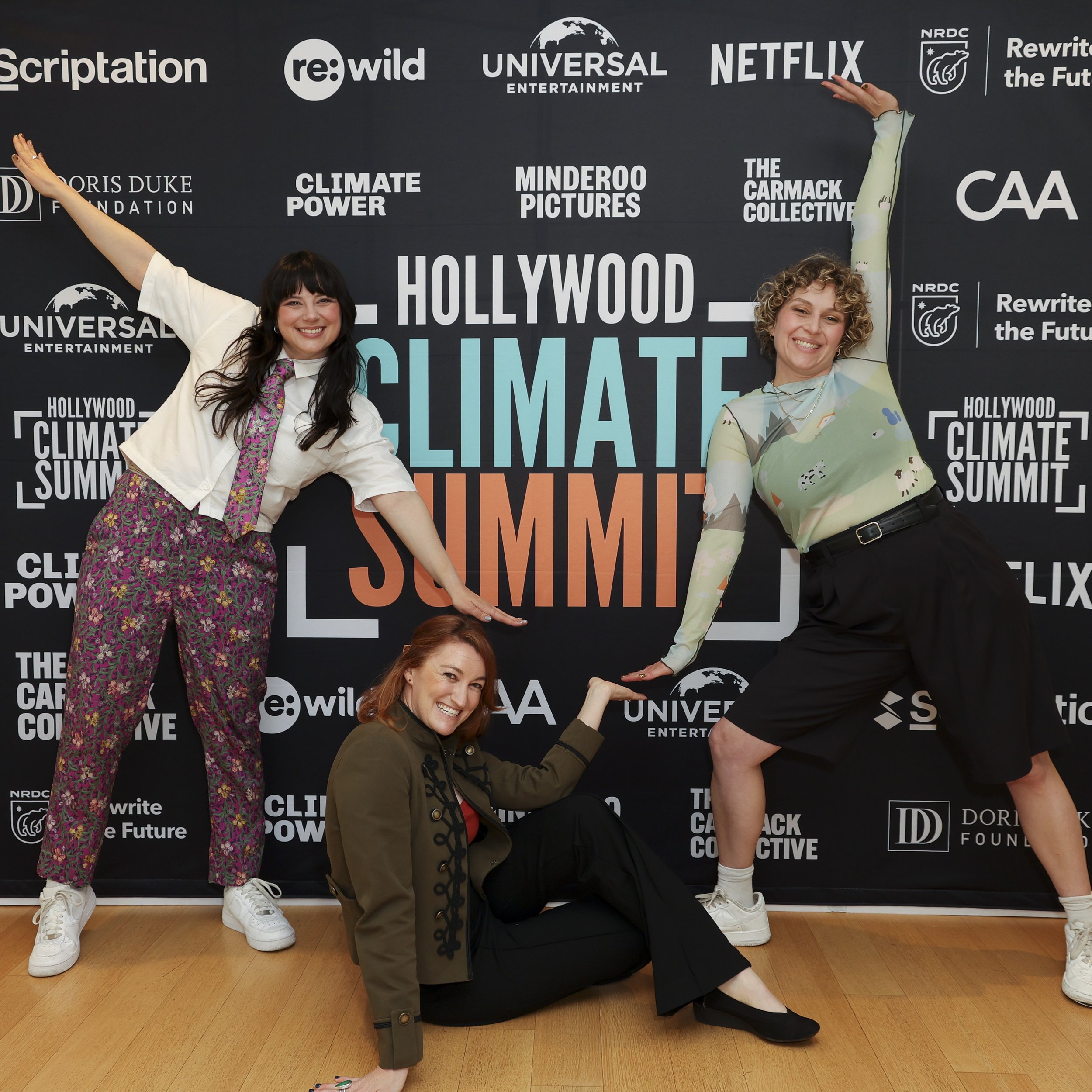
(L-R) Founders Ali Weinstein, Heather Fipps, and Allison Begalman at the Hollywood Climate Summit 2026. Photo by Lex Ryan.
By Daniel Simons
Article Summary
The Hollywood Climate Summit, founded in 2020 by Heather Fipps, Ali Weinstein, and Allison Begalman, leverages the influence of film, television, and media to drive cultural awareness and inspire action on the climate crisis.
The 2026 summit featured diverse voices and innovative storytelling strategies, such as using metaphors like "be more beaver" for regeneration, targeting specific audience interests, finding common ground across political divides, and highlighting the power of interactive gaming.
Expert participants emphasised shifting from a narrative of destruction to one of hope and action, advocating for stories that celebrate community resilience, joy, and the courage to persist in the face of uncertainty.
When HBO aired an episode of Succession that saw media mogul Ewan Roy threaten to cut his grandson Greg out of his will and leave his fortune to Greenpeace, the charity received more than 22,000 requests for information on legacy gifting.
After Netflix dropped The 3 Body Problem, featuring Rachel Carson’s Silent Spring, the 62-year-old classic shot to the top of Amazon’s Environmental Science bestseller list.
And when Love Island partnered with eBay to dress contestants in pre-loved fashion, searches for second-hand clothing soared by over 700 percent.
Everyone with a screen or cellphone understands the influence mass media has on our lives. It doesn’t just inspire changes in behaviour. It shapes our values, drives culture and plays a leading role in how we construct our shared reality.
But until recently entertainment's epic potential to solve climate change has been grossly untapped.
With the crisis playing out in real time and the world's elite storytellers remaining lost for words, Heather Fipps, Ali Weinstein and Allison Begalman saw the stupefying disconnect between the threats on our horizon and the relative silence on screen and they decided to do something about it.
In 2020, they founded the Hollywood Climate Summit with the mission of harnessing the transformational power of film and TV to inspire billions of people around the world to create a just, regenerative and thriving future.
For more than half a decade, the Summit has connected professionals from across film, television, music, fashion, gaming, sport and social media with scientists, activists and experts to inspire climate action at the scale of culture.
From grassroots organisers to A-list celebrities the summit has platformed environmental activists like Bill McKibben and Jane Fonda alongside writers and actors from blockbuster films and TV shows including Grey’s Anatomy, Twister, Extrapolations and Jurassic Park.
In 2026, with the climate crisis accelerating and the hunger for climate storytelling surging, the founding team launched The Context Collaborative, a new organisation with a goal to, “direct cultural attention to climate issues” and “level up how they resonate across the stories, platforms, and experiences people love.”
Expanding beyond Hollywood, the team has “‘put climate on the agenda” at the hottest festivals on the planet including Sundance, SXSW and New York Climate week.
In June 2026, The Context Collaborative delivered the seventh edition of the Hollywood Climate Summit at the Academy of Motion Pictures in Los Angeles.
Featuring deep dives with the creators behind smash hits like Star Trek: Strange New Worlds, Fallout and Pluribus, chats with NASA astronauts and indigenous model-turned filmmaker Quannah ChasingHorse, and even a gloriously unhinged comedy mock debate taking on Big Meat and Dairy propaganda, the summit continues to bring new people into the climate movement, forge unlikely collaborations, and empower the world's greatest storytellers to rewrite the future.
The 2026 sessions are available to binge online, but before you dive in, we've created a teaser of some of the juiciest insights from the program’s eight-plus hours of frontline wisdom.
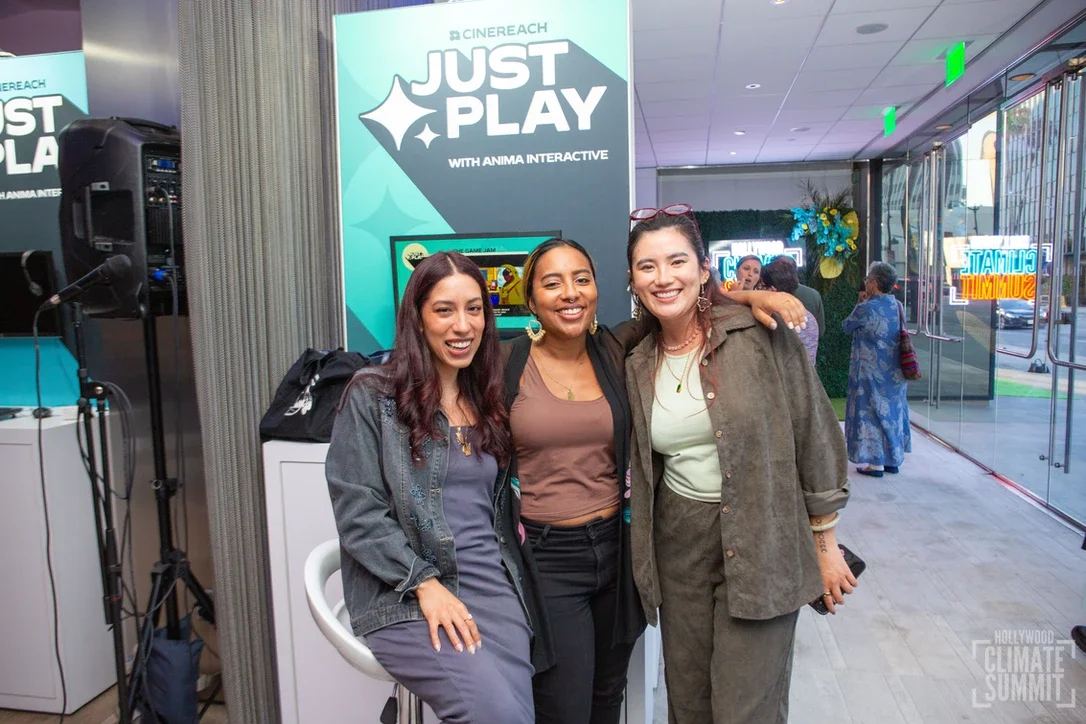
Hollywood Climate Summit 2026. Photo by Lex Ryan.
Be more beaver
Lucy Stone is the director of Climate Spring, a global organisation that supports climate storytelling across film, television, literature and theatre.
Weaving together the challenges of artificial intelligence and the climate crisis, she offered up a damn good metaphor for how we should think about our role in shaping the future: be more beaver.
With a nod to Disney’s Hoppers, Stone argued that if we want to build a better world and avoid becoming slaves to technology, we need to lean into our role as a keystone species.
The beaver, Stone explained, offers a powerful example of what technology can look like when it works with nature rather than against it.
“Beaver dams have been proven to reduce the impact of flooding on villages and towns downstream,” she says, “and, by damming rivers, they create habitats for moss and fish and they improve the conditions for a whole load of other ecosystem species.”
Pointing to “industrial symbiosis,” including AI data centres that redirect waste heat into neighbouring buildings instead of releasing it into the atmosphere, Stone called for more stories aimed at helping us evolve from an age of extraction to an era of regeneration.
Stone’s key message: For decades, we have been surrounded by stories about what is being destroyed. Now we need a new wave of stories that celebrate what is being and can be built.
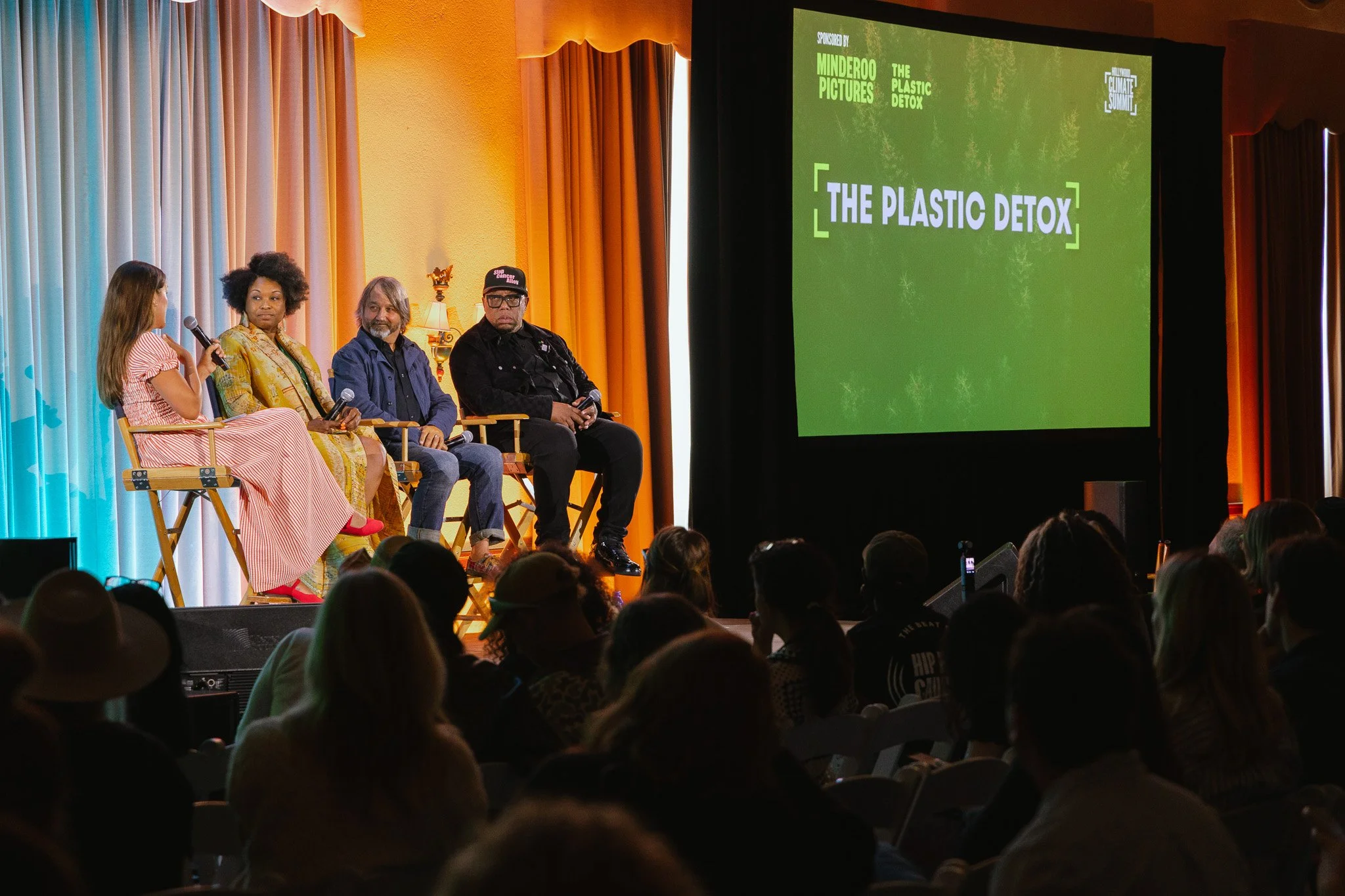
Hollywood Climate Summit 2026. Photo by Lex Ryan.
If you want to make change, attack guys’ balls
In a discussion on plastic pollution, filmmaker Josh Murphy shared a quote from Toni Cade Bambara that has underpinned his creative process for decades.
“The role of the artist is to make the revolution irresistible.”
For Murphy, making things irresistible means understanding what motivates people and creating content that speaks to their fears, needs and desires. Or, to use a tired sporting metaphor, “hit ’em where it hurts.”
So when Murphy decided he wanted to make a documentary about the plastics crisis and climate change, he knew he had to find a side door.
Instead of leading with melting ice caps or floating islands of plastic, his Netflix film, The Plastic Detox, focuses on fertility, a climate-adjacent issue that crosses political, religious and socioeconomic lines.
Drawing on the work of Dr Shanna Swan, the film follows six couples with unexplained infertility as they spend three months removing plastic from their homes to see if it helps them conceive.
“Unfortunately, in this world,” conceded Murphy, “if you want to make change, attack guys’ balls.”
The Plastic Detox opens with right-wing podcaster Joe Rogan’s comments about declining sperm counts, and the film's warnings about plastic exposure were repackaged into viral social media clips that, according to Murphy, helped the project reach well beyond the usual climate and environmental bubbles.
Just weeks after the film’s release, Robert F. Kennedy Jr. announced the federal STOMP (Systematic Targeting of Microplastics) program.
The success of The Plastic Detox also shows that we can combat the drivers of climate change without having to talk about climate change directly.
“Plants or penises,” says Murphy, “Whatever gets you to the party.”
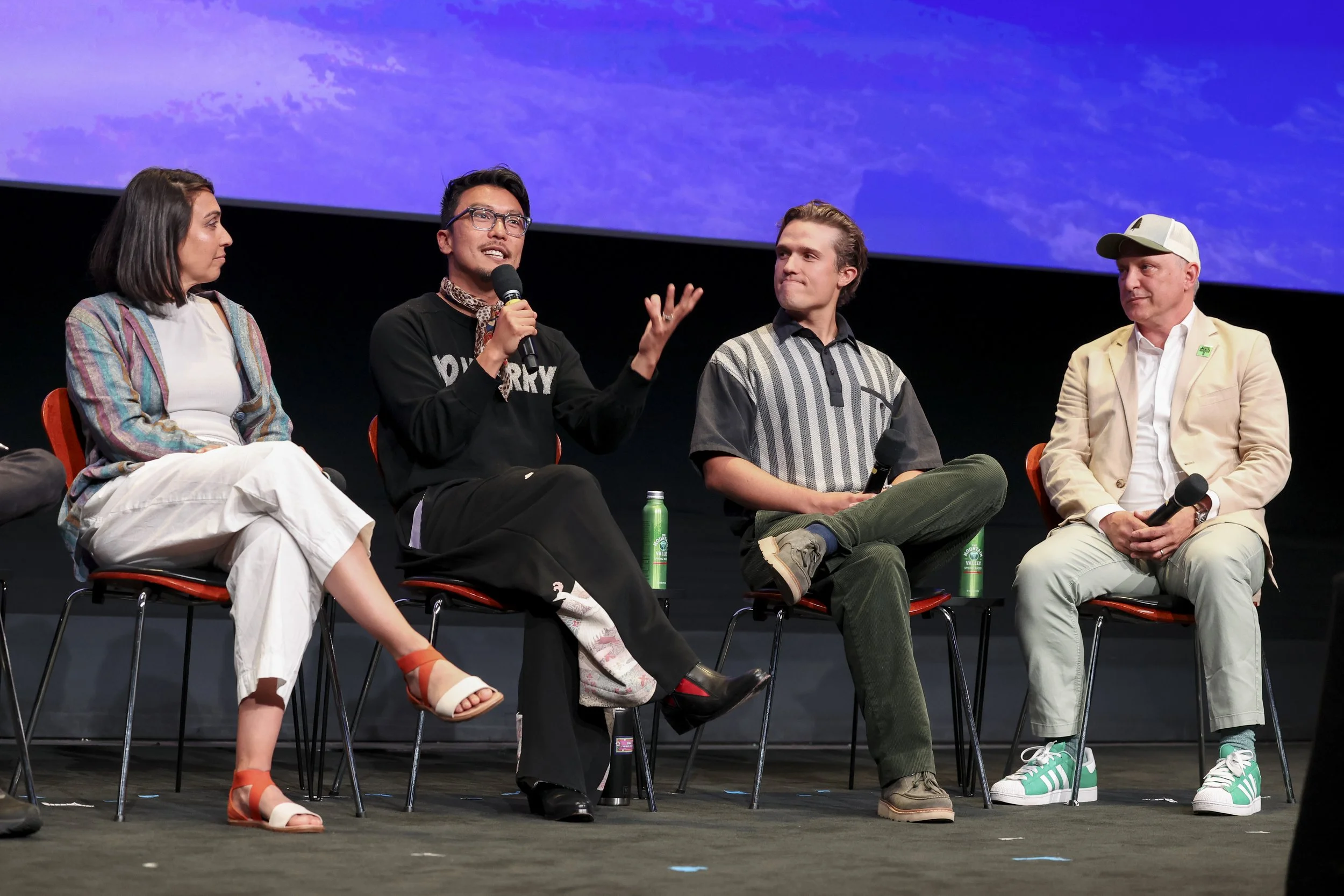
(L-R) Nadia Gill (Encompass Films), Scott Shigeoka (Curiosity Expert), Benji Backer (Nature is Non Partisan), Sacha Spector (Doris Duke Foundation) at the Hollywood Climate Summit 2026. Photo by Lex Ryan.
Be curious and find common ground
Benji Backer was on a mini-moon camping trip with his wife when he was struck by a realisation.
Surrounded by a “gun-toting, bearded guy with a jacked-up truck,” and a Tesla sporting a Trump bumper sticker, he realised that while identity politics and the politicisation of climate change were driving a wedge between left and right, underneath it all almost everyone shared a love of nature and the desire to protect it.
Backer is now the founder of Nature Is Nonpartisan, and is featured in The [Conserv]atives, a documentary about conservatives who care deeply about the environment.
Nature is Nonpartisan has helped build unlikely coalitions across the political divide, fought to protect millions of acres of public land from being sold off, and helped establish the Make America Beautiful Again Commission.
Backer's message is that if we want to protect nature, we need to build a bigger tent. That means meeting people where they are, starting with the values we share and inviting everyone inside.
“I don't think that we can ever write off sitting at a table with those who we disagree with, even the people we dislike the most, because you either sit at the table and try or you don't sit at the table and you immediately lose any shot of winning.”

Hollywood Climate Summit 2026. Photo by Lex Ryan.
Game the system
When you think ‘Hollywood’ and ‘climate’ you don’t normally think ‘PlayStation,’ but one of the loudest messages to come out of the summit was, ‘Do not sleep on games.’
Over 3 billion of us play video games, and according to research from the Playing for The Planet Alliance and NRDC, gamers are more concerned about climate change than average, and more likely to take action.
At the "Endgame: Climate Storytelling in Games" panel, Unity's Marina Pissaros shared the example of Monument Valley 3, Netflix's hope-punk puzzle adventure, where players take on the role of a junior lighthouse keeper whose fossil fuel system fails, sending them in search of renewable energy for their village as sea levels rise.
Alan Gershenfeld, co-founder of E-Line Media, spoke about Never Alone (Kisima Ingitchuna), an award-winning project created with Alaska Native communities that proves how games can become vehicles for cultural storytelling.
Combining gameplay with 24 short documentary films that unlock as players progress, the Iñupiat-inspired adventure was designed to be shared and played together. More than 15 million people have experienced the game, which also picked up a BAFTA and multiple Games for Change awards.
Gershenfeld also reminded us that unlike films and TV series, which are usually consumed alongside a bucket of popcorn or a microwave dinner, games are played.
“Games are about verbs,” he says, “You have to solve problems together. You get feedback from the game, from peers. It's an incredible medium for learning, for health, for social impact, for cultural storytelling, and environmental storytelling."
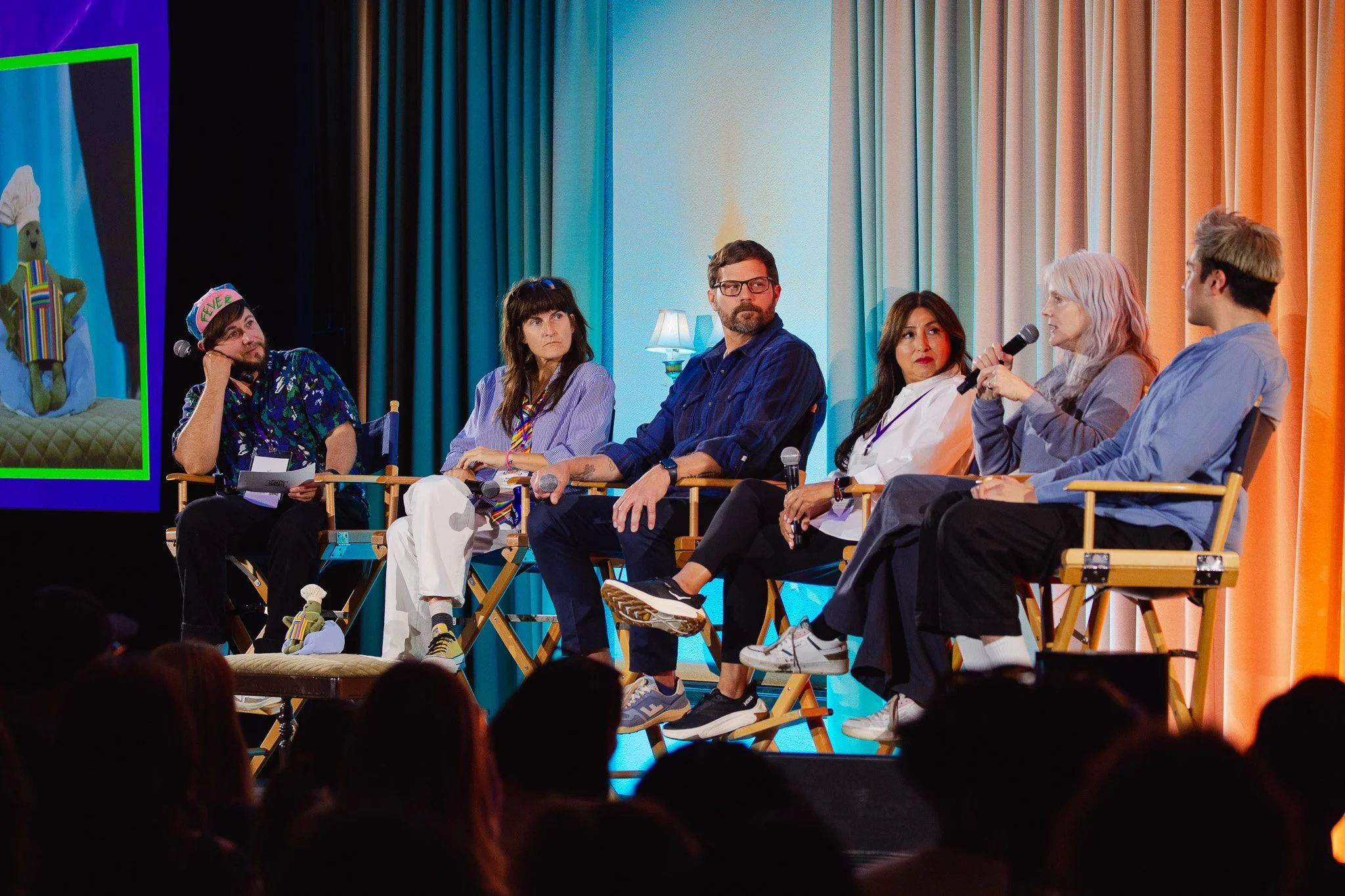
At the Tiny Chef and Friends panel, Alex Blue Davis (Grey's Anatomy,) Rachel Larsen and Jason Kolowski (The Tiny Chef Show), Carmen Santillan (Co-founder, Cena Vegan), Maggie Baird (Support and Feed), Isaiah Hernandez (Queer Brown Vegan). Photo by Lex Ryan.
Feed the joy
Maggie Baird is the mother of Billie Eilish, the global music phenomenon with billions of streams, 10 Grammy Awards and two Oscars to her name.
Eilish might have ruffled some feathers in her recent Elle interview, where she told the world that “You can eat meat! You can love animals. But you can’t do both.” But according to her mother, the best way to inspire change isn't to moralise. It’s to lead with joy.
On the Tiny Chef and Friends panel Baird recounted how she spent years apologising for being vegan before realising it wasn’t changing minds.
Sharing the dark facts about food systems, she found, usually made people defend their choices rather than change them. Eventually she stopped leading with sacrifice and decided to focus on benefits. A tactic that works for any form of environmental action.
Her takeaway nugget for inspiring planet-friendly behaviour: “People can see it as like you're giving something up, like you're sacrificing,” Baird says. “And I'm realising I have to say, ‘I think my life is so much better for this, and I want you to join me because I want your life to be better too.
“Look how great it can be to be compassionate to our planet, compassionate to humans, compassionate to animals. Just to be compassionate feels so good.’”
Through Support + Feed, the nonprofit she founded in 2020, Baird now works with rockstar touring chefs to create and name plant-based meals to make them as irresistible as possible.
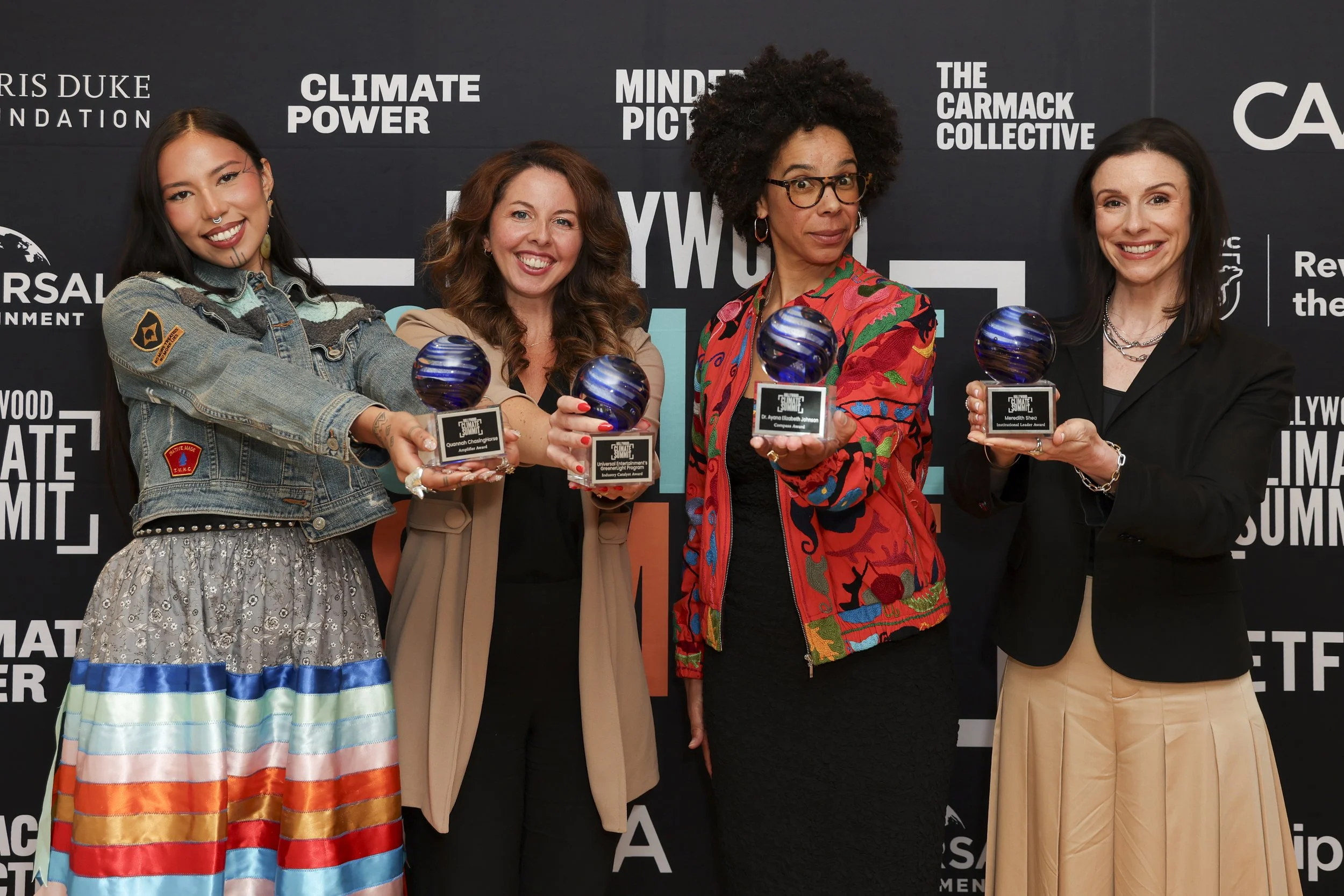
(L-R) Quannah Chasinghorse (Amplifier Award), Kimberly Burnick representing Universal Entertainment’s GreenerLight Program (Industry Catalyst Award), Dr. Ayana Elizabeth Johnson (Compass Award), and Meredith Shea (Institutional Leader Award). Photo by Lex Ryan.
Fall in love with the future
Ayana Elizabeth Johnson, founder of Urban Ocean Lab and author of What If We Get It Right?, asked a simple but provocative question: “What if we acted like we love the future?”
Johnson joined the Apocalypse to Adaptation: Storytelling for What Comes Next panel alongside Lisa Joy (Fallout and Westworld), Alison Tatlock (Pluribus), and Steph Spears (Future in Bloom). Together they argued that science fiction shouldn’t just be dystopian or escapist. It can be a way to prototype the future, rehearse it and fall in love with it before it arrives.
Making the case that we can take our challenges seriously without taking ourselves too seriously, the panel called for more climate rom-coms, more hot shirtless solar installers and more stories about a world we might actually want to live in.
Keep calm and “okie dokie”
Dreaming up delicious futures gives us a north star to guide us. But let's face it, whatever utopia might lie on the horizon, the road to get there is probably going to be messy as hell.
Ayana Elizabeth Johnson reminded us that we don't need to know everything is going to be okay to show up and do the work. Instead, she called for more stories of courage and tenacity in the face of an uncertain future.
Lisa Joy offered up Fallout's "plucky" heroine, Lucy, as a refreshing example of grit on screen.
Forced out of an underground bunker and into a post-nuclear hellscape, Lucy is assaulted with one impossible task after another. But no matter what is thrown at her, she never spirals or freezes. She simply accepts what needs to be done.
“She says, ‘Okie dokie,’ and she just keeps walking,” says Joy.
The Fallout writer reflected on how she turns to that same can-do mindset in her own life.
“When you think about all the problems in the world it can become so overwhelming that it feels like you might as well not do anything because it's too much. It can cause a kind of personal torpor and frozenness,” she says.
“But when you realise there are just little steps that you can chip away at, first in your backyard and in your community, even if it's just one thing a day, it makes it easier.”
As the future becomes more complex and chaotic, we're going to need more stories of resilience and fortitude. Stories that remind us that whatever the world throws at us, sometimes the best thing we can do is just say, "okie dokie," and climb that mountain.