
Accelerating Australia's Circular Economy: Circuiti’s Strategy for Waste Reduction
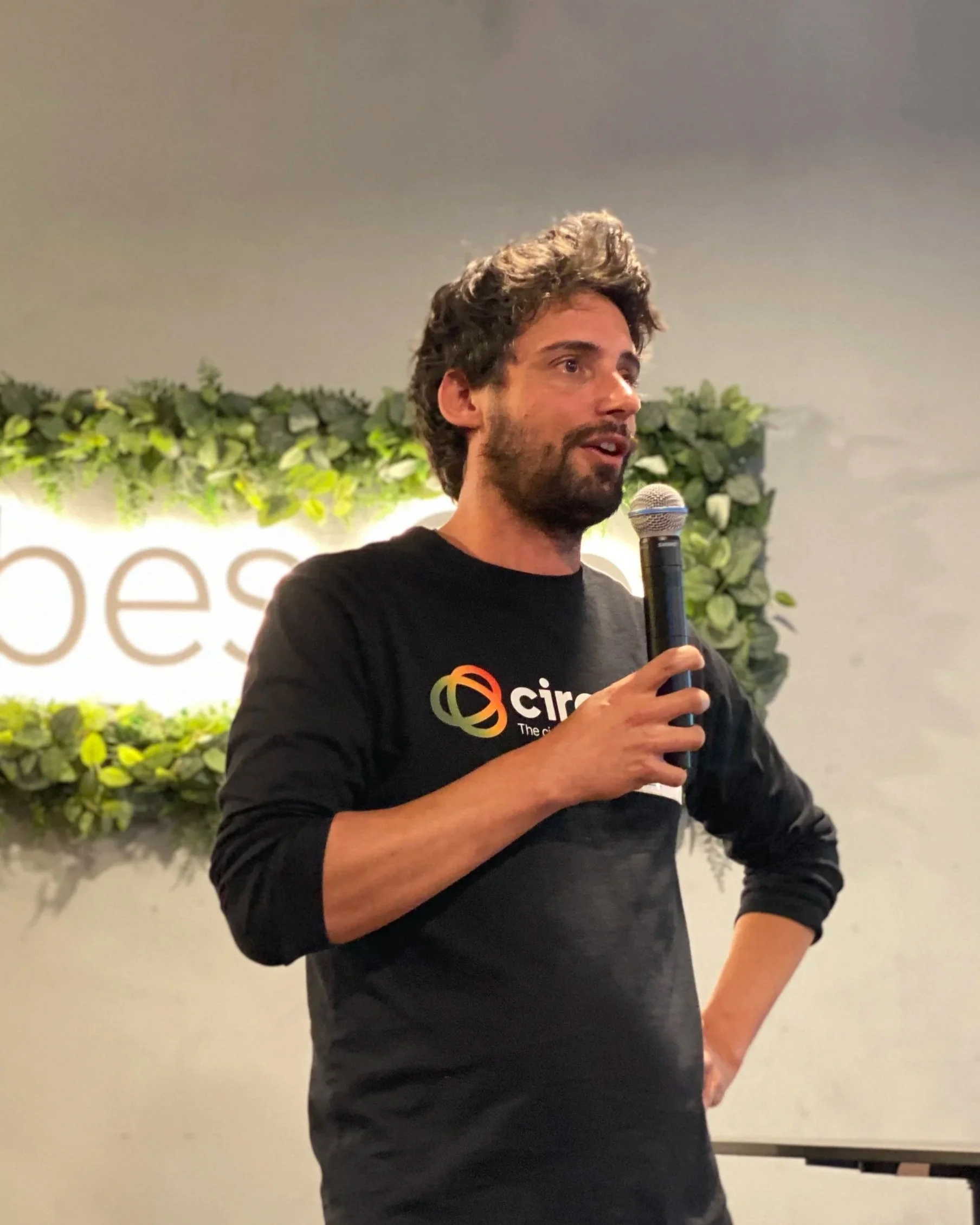
Geert Hendrix, co-founder of Circuiti at community event at Creative Cubes Collingwood. Image courtesy of Circuiti.
By Daniel Vlahek
Article Summary
Circuiti addresses the 'linear economy' problem by connecting corporations with circular economy startups to eliminate waste directly, rather than just managing it.
By streamlining the procurement process, it provides companies access to a network of verified businesses, making the adoption of circular practices easier and more efficient.
Despite economic challenges, Circuiti is evolving into a partner-based consultancy, focusing on data-backed strategies to help businesses achieve significant waste reduction and cost savings.
Imagine you are an operations manager for a global manufacturing company.
The company’s board has given you a mandate to transform one of your central hub’s operations after company stakeholders demanded more eco-positive practices after the latest shareholder meeting.
The objective is clear: reduce scope 3 emissions by eliminating waste out of operations whilst still meeting commercial goals.
Easily done right? Yet reality hits on Monday.
Your warehouse bins are full of soft plastics, cages of outdated IT assets are piling on shelving racks with discarded commercial furniture gathering dust in the corner.
You have made a commitment to reduce, reuse, and recycle; but procurement rules are rigid. Verifying vendors takes months and each passing day, more waste accumulates.
With no time on your hands, the default option wins - waste gets allocated to skip bins to be cleared by the end of the week.
This is the operational logjam that the circular economy (CE) space finds itself against. But it's also one Circuiti aims to solve.
Geert Hendrix, co-founder of Circuiti, explains how they’re breaking this gridlock in Australia.
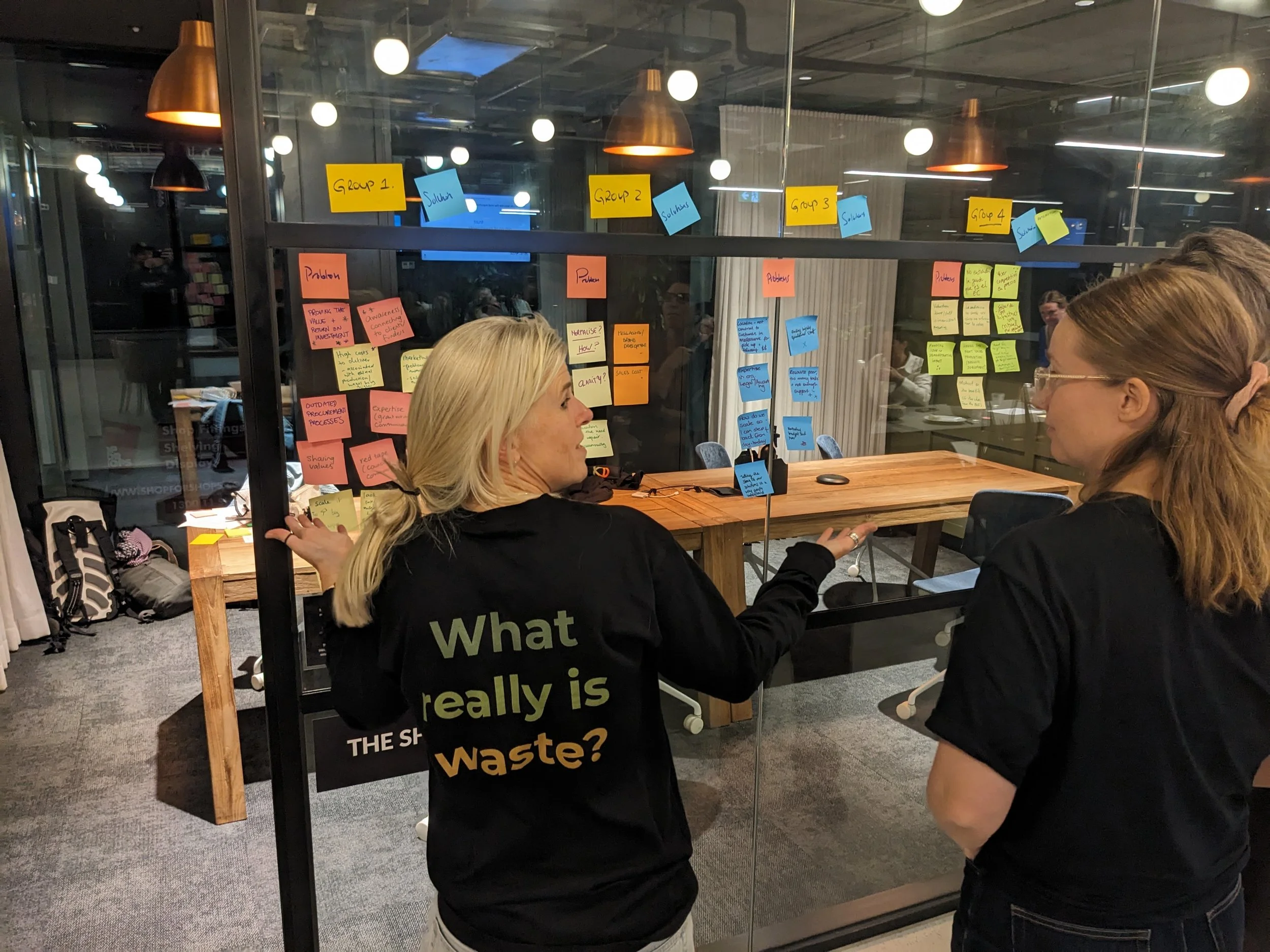
Kristina Cockbill, Agile coach, workshopping during a Circuiti community workshop at Creative Cubes Collingwood. Image courtesy of Circuiti.
Accelerating the Circular Economy though Matchmaking
Founded by a trio of CE innovators, including Ninna Larsen from Reground and Julia Laidlaw from Sporadical City Mushrooms, Circuiti was built to fill a specific need.
“Circuiti was created…to help procure sustainability start-ups directly through corporates and councils as a matchmaker.
“[We] analyse corporate and government waste streams and match the right circular economy business to solve those issues with a focus on eliminating waste rather than managing it”, Geert explains.
For a massive multinational company who is looking to ‘circularise’ their supply chain, vetting several niche companies is troublesome to say the least.
With Circuiti, that process is streamlined, granting companies access to a network of 50+ approved Circular Economy Businesses (CEBs), or as Circuiti prefer to call them ‘Born Circular Businesses’.
These enterprises, as he adds, are intentionally designed from day one to operate within a ‘closed loop’ system.
“They're repurposing resources where they actually create a surplus of something rather than just managing it down the track”, he says.
One standout from their network is Bear Hug.
Instead of relying on single-use plastics, Bear Hug has engineered a reusable, heavy-duty jacket for logistic pallets. They have plugged themselves into existing supply chains, with one jacket being used hundreds of times over.
“This is an actual circular solution”, Geert says. “This is a born circular business.”
And that is also part of Circuiti’s mission.
Adjacent to translating sustainability strategy into tangible action, is showcasing what circularity really looks like within our linear economy.
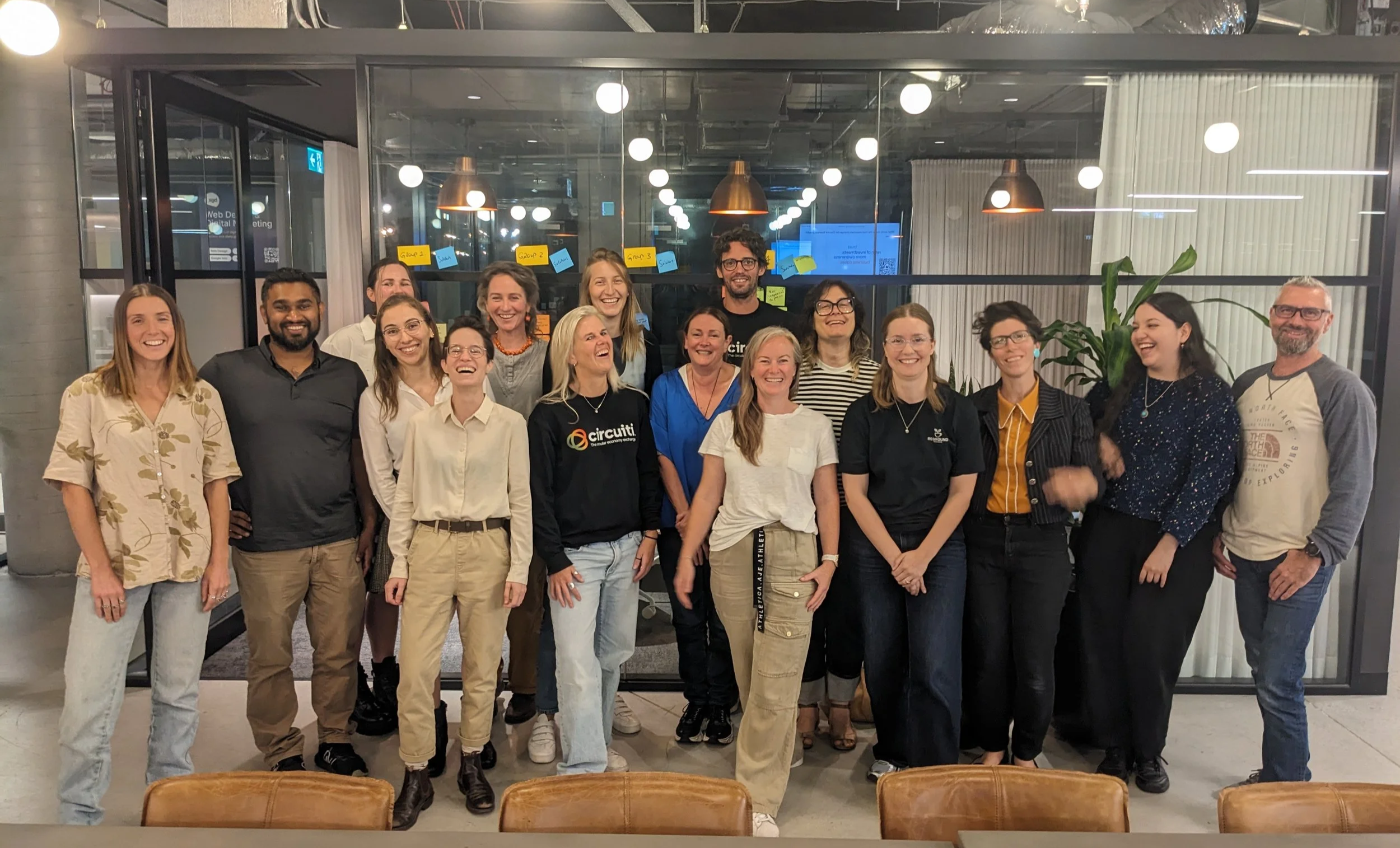
Group photo from Circuiti community workshop at Creative Cubes Collingwood. Image courtesy of Circuiti.
‘Squaring the Circle’
“Managing waste is a problem of the linear economy,” he explains.
“The more waste that’s created, you are basically managing a linear system.
“This is where the circular economy is often misused to mean just basic recycling. Managing a linear problem doesn’t make it circular - our value is to make sure it doesn't happen in the first place.”
This linearity, as Geert describes, references our current economy which runs on a ‘take-make-waste’ model. By contrast, a circular economy aims to meet needs with fewer materials, reduced environmental impact and costs to economic activity.
Collectively, getting this narrative across has been challenging, which is why using appropriate language, as Geert highlights, is critical to addressing uptake.
Internally, Circuiti calls this methodology “Squaring the Circle.”
“If you speak ‘circle’ to a corporate ‘square’, they are mostly going to say no because it doesn’t fit their box”, he says.
“You have to change the language. You start manipulating their square by changing the criteria to tick their boxes.” All the physical solutions already exist…but implementing them is hard because no one wants to pay for it.”
And speaking that language has already paid off.
“Capgemini for example have taken on multiple [CEBs] from Circuiti; they only needed to go through Circuiti once because it bypasses risk and procurement [processes], bringing all these services under one banner”, Geert says.
Rather than communicating the circular economy as a system (which it is), the reframing to present day solutions sells a much clearer value proposition to businesses and governments alike.
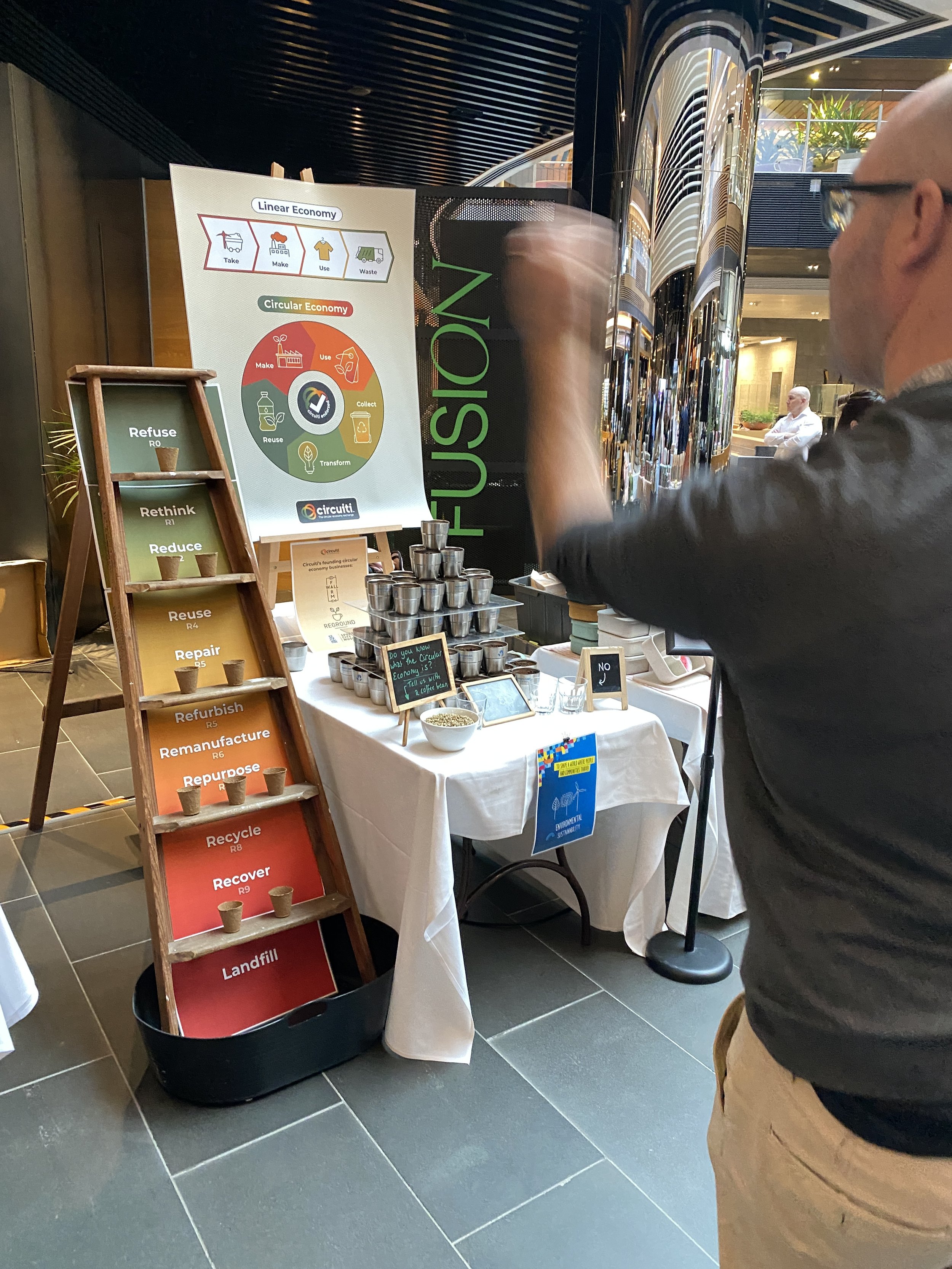
ANZ circularity activation at ANZ Market Place. Image courtesy of Circuiti.
The Stark Realities of CE
Sadly, innovators are not immune to disruption themselves.
Recent headwinds in the ESG space have made sustainable investing harder to come by with geopolitical tensions, rising economic pressures and a diversion of capital towards AI all slowing progress.
Despite the Australian government trying to isolate its markets from declining ESG mandates by unveiling its comprehensive Circular Economy Framework back in 2024 as well as fixing policy mismatches, national circularity has remained stagnant at 4.6% against the world’s average at 7.2%.
The latest Productivity Commission Inquiry Report highlights that higher costs and interest rates have effectively curbed corporate and government investment into circular solutions.
This has snowballed to higher operational costs for circular businesses themselves, highlighted by the recent liquidation of Goterra and Circonomy in recent years.
Instead of compromising on their mission, Circuiti have approached things pragmatically: refreshing their architecture and emerging as a partner-based consultancy firm.
With their new website being launched in July 2026, Circuiti is aiming to fill their ranks with experienced CE professionals to support their mission.
A major focus will be partnering with local councils (where viable) to recommend verified CE solutions for local businesses.
“It's more about creating a lean, solid model…and then have it ready for when the circular economy is actually at a stage where we can actually demonstrate that niche...[and] some great impact.”
A Waste ‘Goldmine’
Geert adds: “If I was given two or three months and the mandate to implement a series of born-circular businesses into a major corporation, we could eliminate their waste streams by 30% almost immediately.
“And that saves massive costs. If you can demonstrate a proven model that reduces expenses significantly, you don’t even need to say the words ‘sustainability’ or ‘circular economy’.
“Just show them the budget savings and people will jump on the bandwagon.”
If you are a sustainability and CE professional, reach out to the Circuiti team, because the opportunities to design out waste have never been greater.
And despite their pivot, the matchmaking DNA is not going anywhere - on the contrary, it’s simply evolving.