
Second Life Studio: Rethinking Waste as a Material Resource
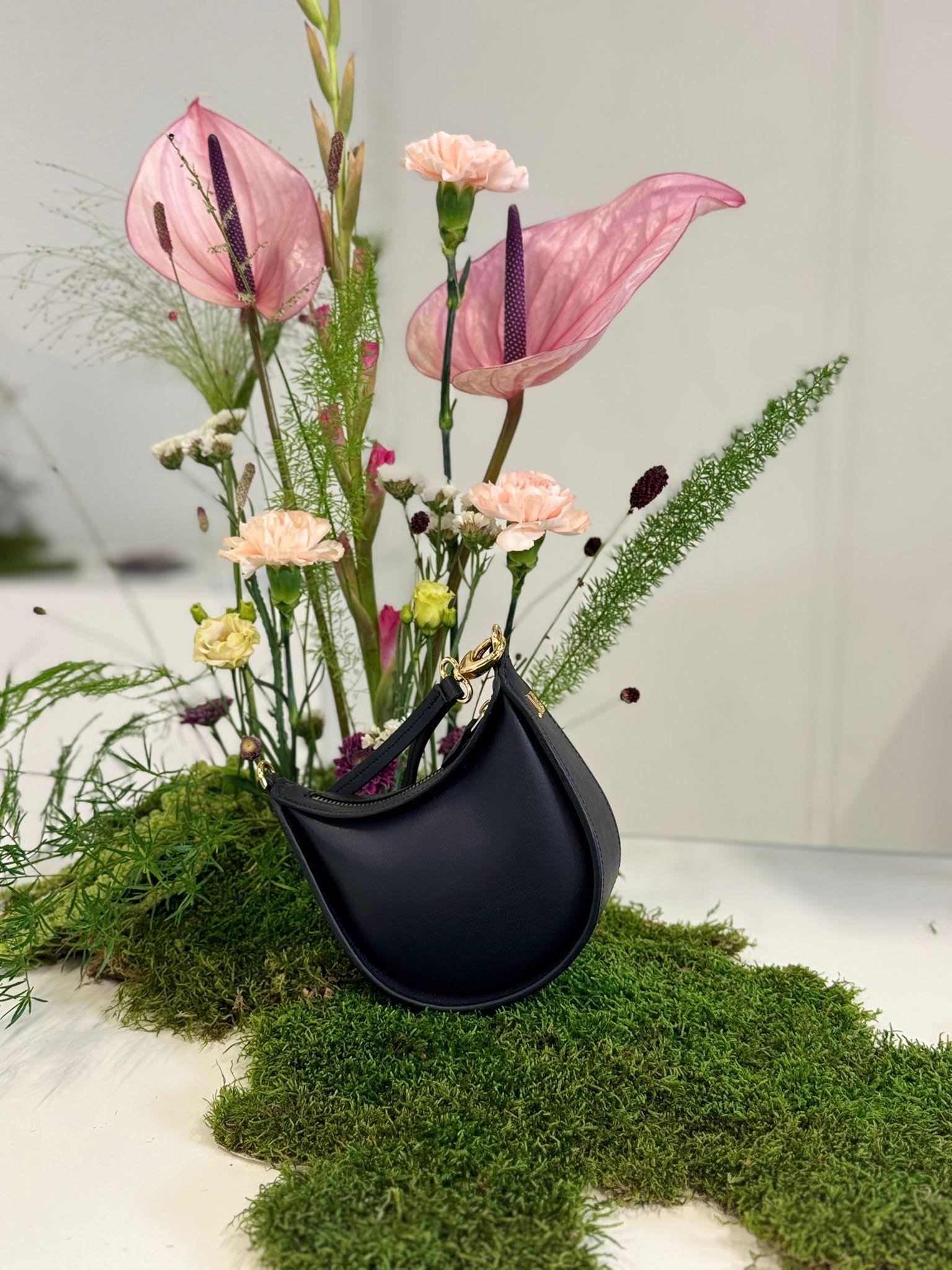
A tote by Alt. Leather. Image courtesy of Alt. Leather.
By Alexi Freeman
Article Summary
Regenerative design draws inspiration from nature’s closed-loop systems, challenging the modern take-make-waste model by turning discarded materials into resources.
Australian studios such as Alt. Leather, Studio Flek and Defy Design are leading this shift, transforming agricultural waste, stone offcuts and mixed plastics into durable, circular design.
Part of a global movement, these practices show how thoughtful material reuse can reduce environmental harm while creating meaningful, place-based design for a climate-challenged future.
There’s no such thing as waste in natural systems. The cycle of birth, death, and renewal runs seamlessly throughout Nature. Branches fall and feed fungi, shells are outgrown and repurposed as new real estate, and leaf litter slowly decays, reinvigorating the soil with nutrients.
For thousands of generations, humans have harmonised with these cycles, adapting daily practices in response to seasonal changes and material availability, weaving renewal into the fabric of everyday life.
First Nations peoples in Australia obtain lime, pigment, and tools from shell middens. The Japanese practice of kintsugi repairs broken ceramics with gold, highlighting imperfections rather than concealing them. Egyptians experimented with mixing plant ash, powdered quartz, and sand to sculpt ceramics known as faience.
Pre-industrial material cycles never ran in straight lines — they intertwined, transformed, and looped byproducts in practical and poetic ways. Over the last 250 years, our take-make-waste mindset has disrupted ancient cycles, degrading soil, polluting air, and drowning oceans in microplastics.
Drawing on our lineage of renewal, Australian studios are coming full circle, designing systems that enable discarded materials with a chance at redemption.
From agricultural waste to stone offcuts and post-consumer plastics, designers are plucking leaves out of Nature’s book, turning overlooked and abandoned materials into functional, thoughtful, and regenerative design.
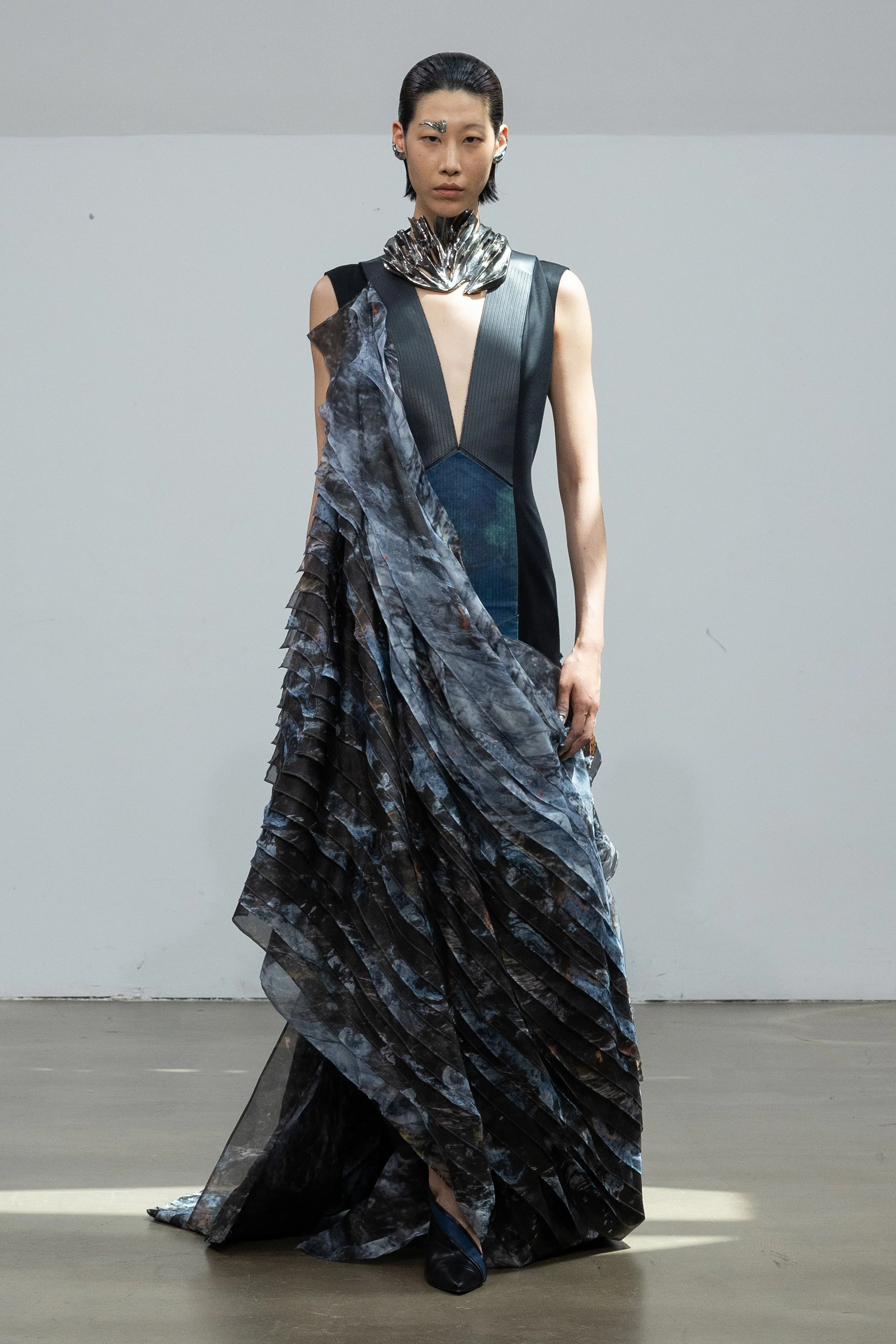
Alt.Leather was featured in Yuima Nakazato’s collection during Paris Haute Couture Week. Image courtesy of Alt. Leather.
Alt. Leather
Agricultural waste is too often devalued as an inconvenient byproduct. For biomaterials innovator Tina Funder, it represents fertile ground for reinvention.
Her Bunurong Land/Melbourne-based studio Alt. Leather cultivates a material grown from abundance rather than extraction.
“Working with grape marc and rice husks valorises waste,” Funder tells Matters Journal. “Circular design for us means using waste where possible, relying solely on regenerative feedstocks, and ensuring our material returns safely to nature.”
Founded in 2023, Alt. Leather has rapidly matured from Funder’s advertising executive exit-strategy to a globally recognised regenerative design practice, recently collaborating with Yuima Nakazato during Haute Couture Week in Paris.
Each batch of material is engineered more like a living system than a static product — durable for years and biodegradable in industrial composting.
“Transforming Penfolds’ grape marc into a high-value material shows what’s possible when agriculture and design collaborate. Waste becomes a resource, and regenerative partnerships can strengthen regional ecosystems through transparency and shared environmental responsibility.”
For Funder, circularity isn’t virtue-signalling, but a non-negotiable constraint. “If our feedstock can’t grow back, or our process locks in unnecessary emissions, then it doesn’t belong in Alt. Leather.”
By treating waste as feedstock rather than landfill, Alt. Leather is reshaping Australia’s luxury materials landscape — rooted in regeneration, scaled through science, and engineered to return to the earth cleanly.
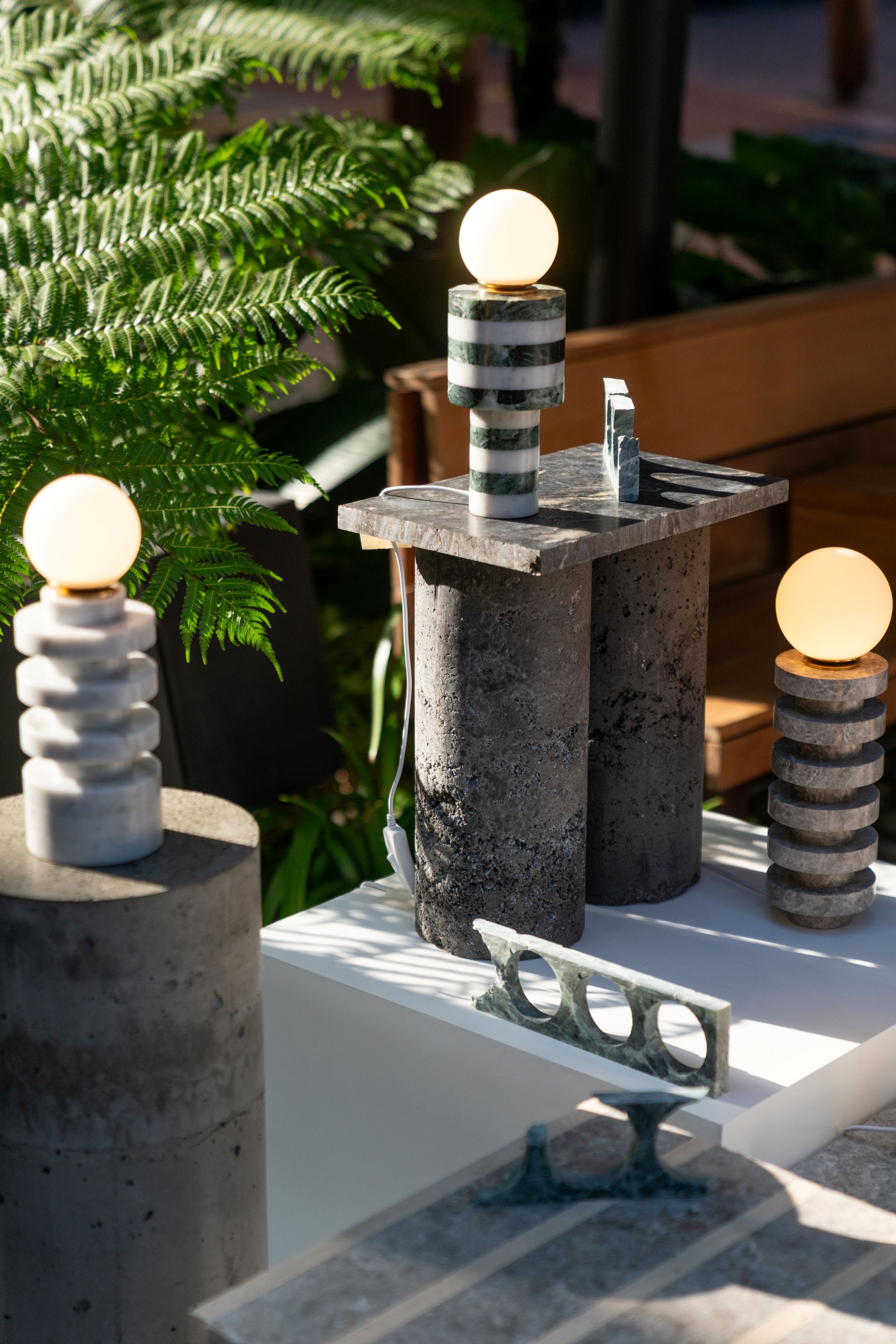
Odds and Ends Marble Offcut Lighting. Image courtesy of Studio Flek.
Studio Flek
Working at the intersection of architectural form, material exploration, and environmental sensitivity, Studio Flek was founded in 2017 by architect Lisa Kajewski and industrial designer Chris Miller on Kombumerri Land/Gold Coast.
Alongside their architectural practice, their object work is a hands-on lab where materials guide design thinking.
In their Odds & Ends series, perfection isn’t the goal. Instead of chasing flawless stone, they turn to marble offcuts salvaged from the reject pile. Once stabilised, refined, and illuminated, these fragments echo the Japanese principle of Wabi-Sabi, where beauty and value emerge from the shadows of imperfection.
As Miller tells us: “I start with the material’s history, not its defects. Marble offcuts are produced through standard industry practice, yet they sit outside commercial use. By reworking them, I question why value is narrowly defined in the first place.”
For Kajewski, the design process is an act of listening: “Working with offcuts is a way to learn directly through the hands. Each fragment sets its own conditions, and the making process becomes a series of tests in balance, texture and the quiet logic of material behaviour.”
Guided by the stone’s ruptures, grain, and irregularities, Studio Flek enables material behaviour to determine form. The resulting works are visually gentle and conceptually strong — reminding us that waste is often beauty waiting to be understood.
Defy Design
Where Alt. Leather works with organic byproducts, and Studio Flek elevates flawed stone, Defy Design tackles one of Australia’s too-hard-basket waste streams: mixed plastics that rarely enter high-quality recycling pathways.
Co-founded in 2019 by Sam Davies and Will Thompson, Defy Design takes a hands-on approach to rethinking waste grounded in proximity, transparency, and material responsibility.
In their micro-manufacturing studio on Dharawal Land in Sydney’s south, post-consumer plastics from nearby businesses, councils, and community groups begin another cycle, reshaped into homewares, furniture, and architectural components.
Each object is designed with an afterlife in mind, intended to re-enter material cycles rather than lose material value to waste streams. By keeping fabrication small-batch and in-house, they sidestep the carbon footprint of offshore recycling and keep material value circulating close to home.
Their philosophy is made explicit in the studio’s mission to “stop the production of all virgin plastic and keep all existing materials in circulation,” reframing plastic as more than disposable waste, but as a valuable resource that can flow ad infinitum within a closed-loop system.
Defy Design’s work demonstrates that regenerative design doesn’t need to mean speculative or remote. It can be pragmatic, economically viable, and socially embedded — reconnecting people to their ongoing story of waste, and the possibility of circular systems operating at a community scale.
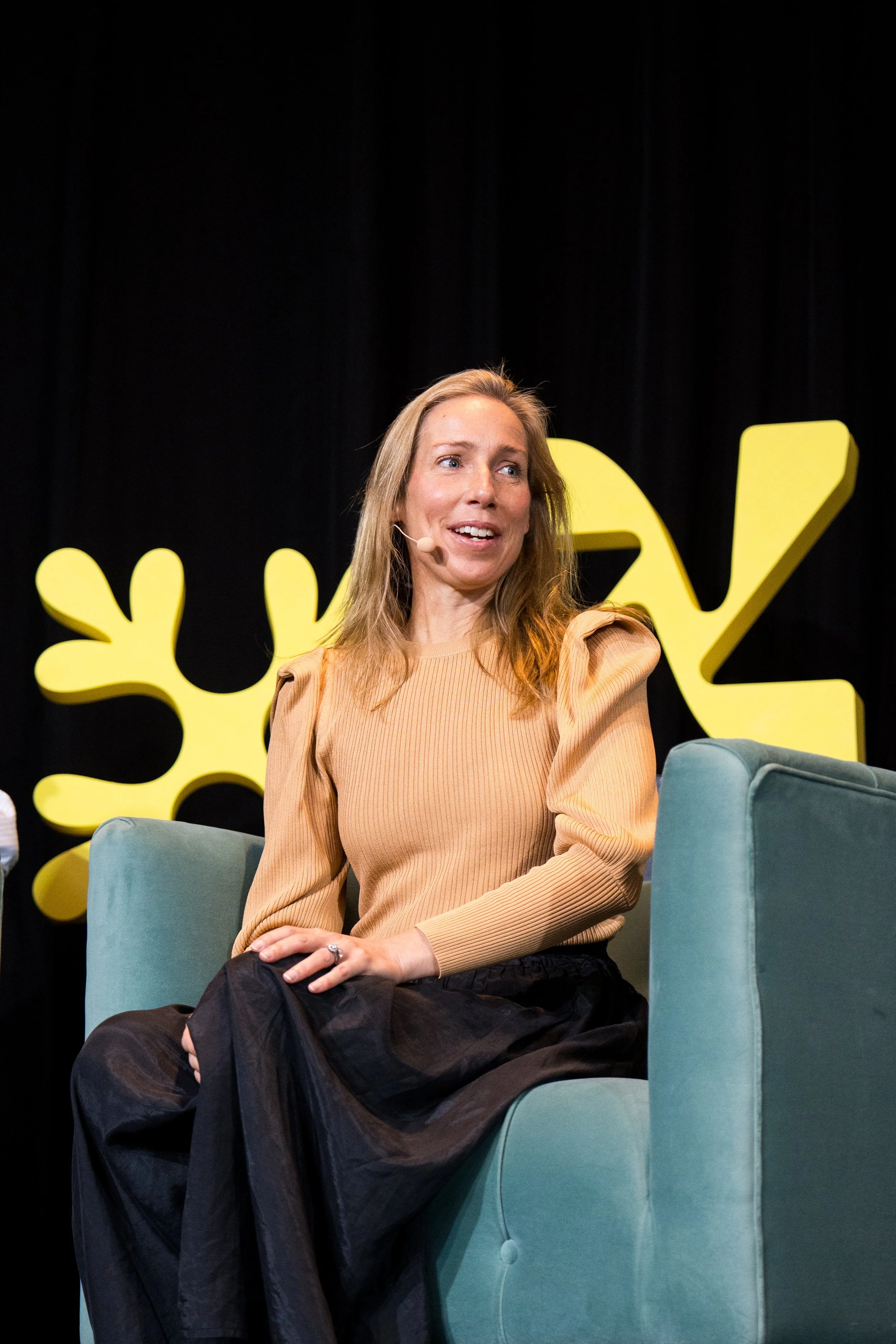
Alt. Leather founder Tina Funder speaks at Cicada x Tech23. Image courtesy of Alt. Leather.
Global creatives
Australian designers aren’t alone in this shift, part of a growing group of global creatives reframing what we think of as waste, turning discarded materials into vital, thoughtful design.
Dutch designer Studio Roosegaarde creates jewellery using carbon captured from air pollution. In Brazil, Studio Swine recovers ocean plastic, reshaping it into objects embracing circularity. Indonesian-based Mycotech Lab blends agriwaste with mycelium, crafting materials that support soil regeneration once their functional life is over.
As climate change threatens to redefine ecosystems, livelihoods and economies, regenerative practices are veering design away from the linear systems driving resource depletion, biodiversity loss, and rising sea levels.
Grounded in planetary care, shaped by connection to place, and attentive to Nature’s limits, regenerative design invites us to see discarded materials as more than waste, but as matter poised for a second life — a life that is waiting to be designed.