
Eating the Future, Remembering the Past
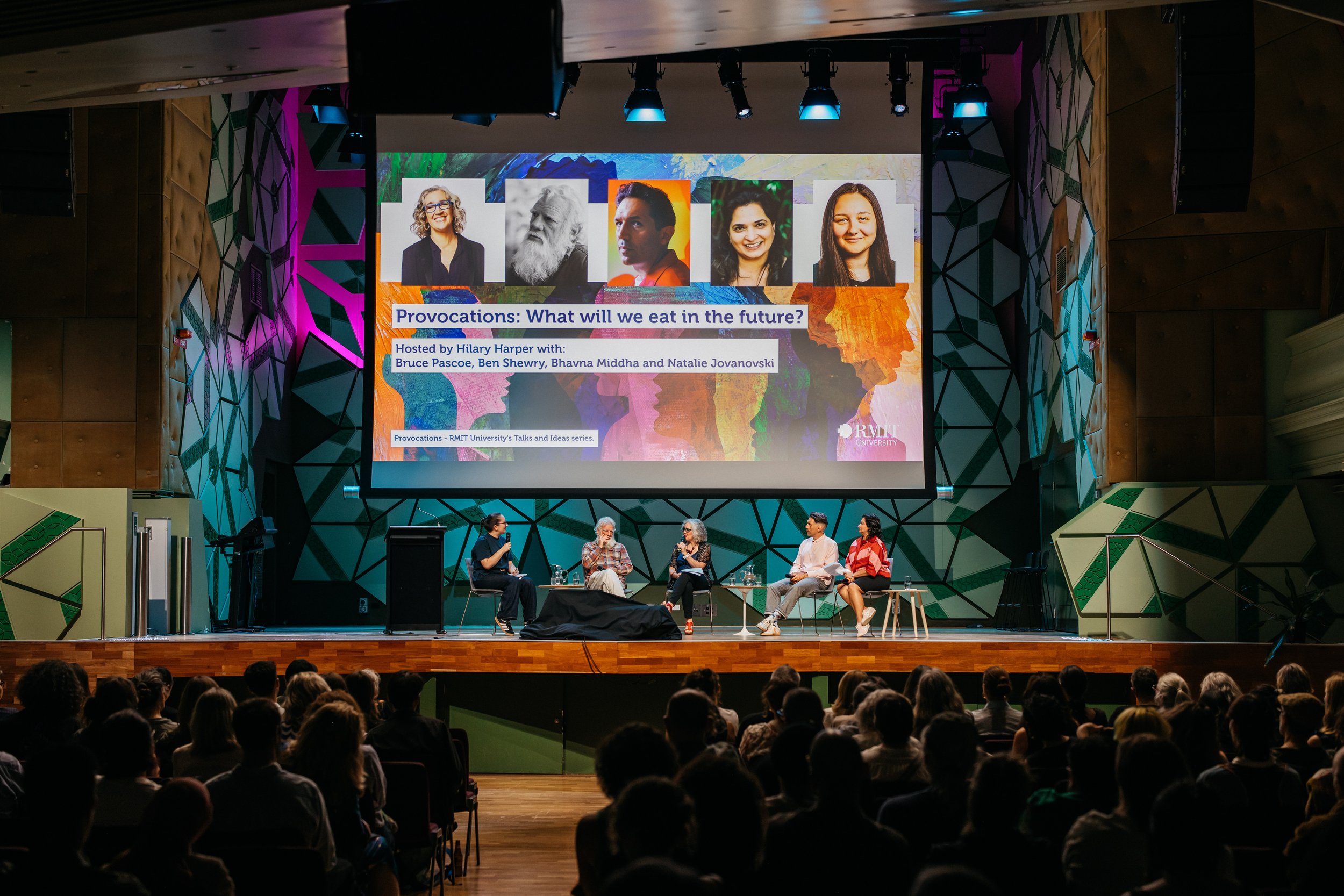
From L to R: Natalie Jovanovski, Bruce Pascoe, Hilary Harper, Ben Shewry, Bhavna Middha. Photographer: Marie-Luise Skibbe
By Alexi Freeman
Article Summary
At a recent RMIT panel, experts explored the future of food, connecting Indigenous knowledge, sustainability challenges, and evolving global food systems in “Provocations: What will we eat in the future?”.
For 65,000+ years, First Nations food systems were regenerative and place-based; colonisation replaced them with industrial models harming environmental and human health.
A sustainable future requires reviving Indigenous practices, systemic change, and equitable access to affordable, nutritious food while reconnecting people to place, culture, and Country.
Cultural practices surrounding food systems are our most fundamental human experiences. For more than 65,000 years, food meant more than sustenance — it was a reciprocal relationship between people, place, and season.
First Peoples across Australia learned and encoded food knowledge through songlines, shaping the land with care.
From yam harvesting on Yolngu Country in northeast Arnhem Land to the aquaculture systems engineered by the Gunditjmara at Budj Bim in southwest Victoria, food systems were regional, cyclical, and embedded in traditional ecological knowledge.
Since colonisation, that relationship has dramatically shifted. Industrial agriculture, ultra-processed foods, and global supply chains have reshaped what we eat and how we engage with food — at high cost to environmental and human health.
At RMIT’s Storey Hall, a panel in early April brought together four voices with a shared hunger to answer a deceptively simple question: What will we eat in the future?
Moderated by ABC presenter Hilary Harper, the conversation danced between past knowledge, present creativity, eco-limits, and social equity — circling the steps toward building a sustainable food future.
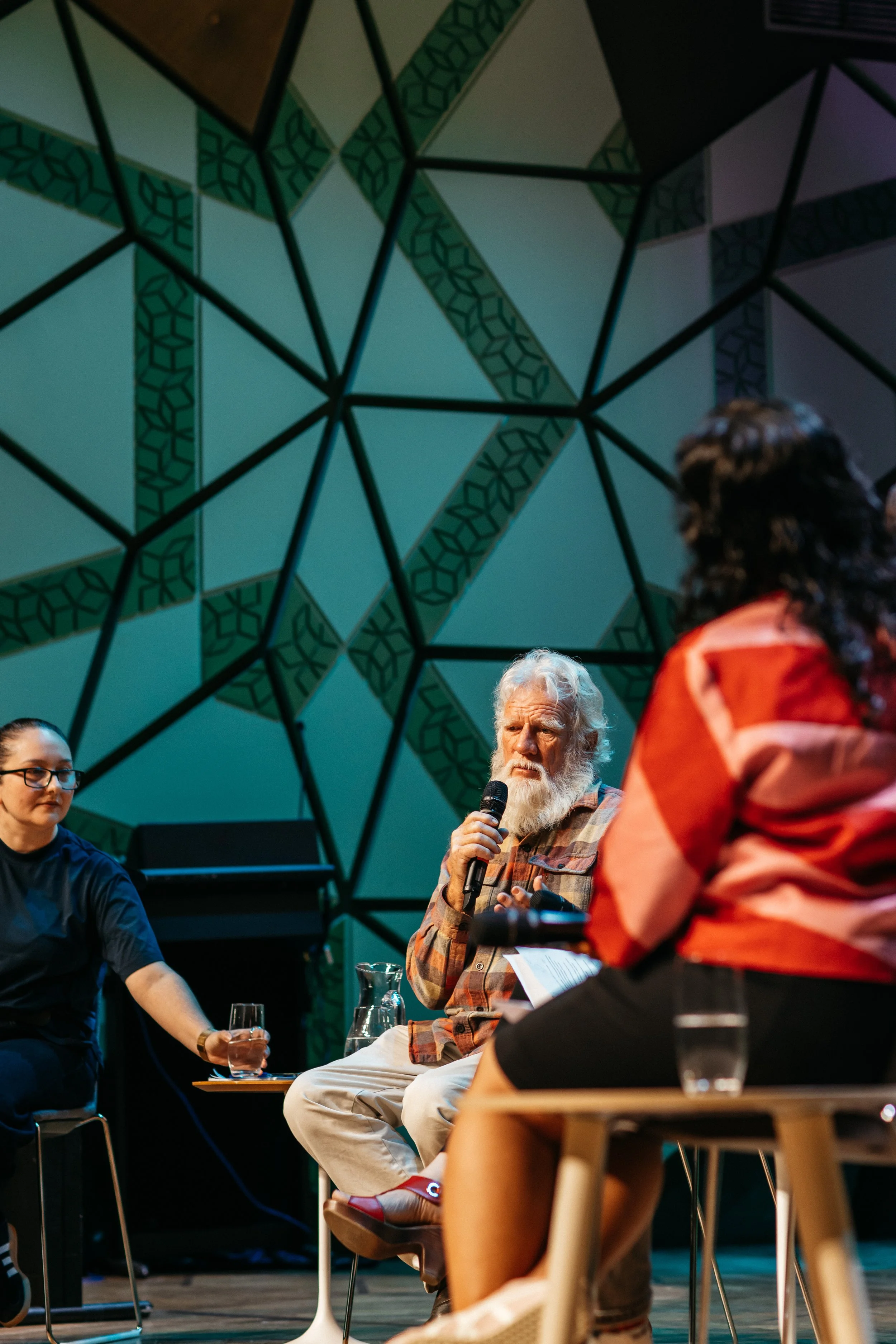
Bruce Pascoe. Photographer: Marie-Luise Skibbe
Deep Time
Writer and Aboriginal farmer Bruce Pascoe challenged one of Australia’s most persistent myths — that pre-colonial societies were purely nomadic hunter-gatherers — asking us, “Is capitalism working the way we want it to?”
Drawing on research he popularised in Dark Emu, Pascoe pointed to sophisticated systems of agriculture and aquaculture that sustained First Nations communities for thousands of generations.
These were not extractive but regenerative practices: harvesting drought-resistant native grains, cultivating yam daisies, and using cultural burning to renew soil and stimulate growth, grounded in an understanding of the limits of living on Country.
"We need to treat the soil like a relative and look after her," Pascoe said.
Pascoe also illuminated a deeper cultural barrier: “Our aversions to new food, our aversion to any kind of understanding of Aboriginal achievement are such that we can barely look at warrigal greens; we can barely look at tubers.”
Long before carbon accounting and sustainability targets, food systems were governed by restraint, reciprocity, and respect for Country. Through Pascoe’s ancestral lens, the future of food feels less like a frontier and more like a return.
Our challenge now is not simply innovation but whether we’re willing to reckon with — and relearn — ancient food systems that long predate colonisation.
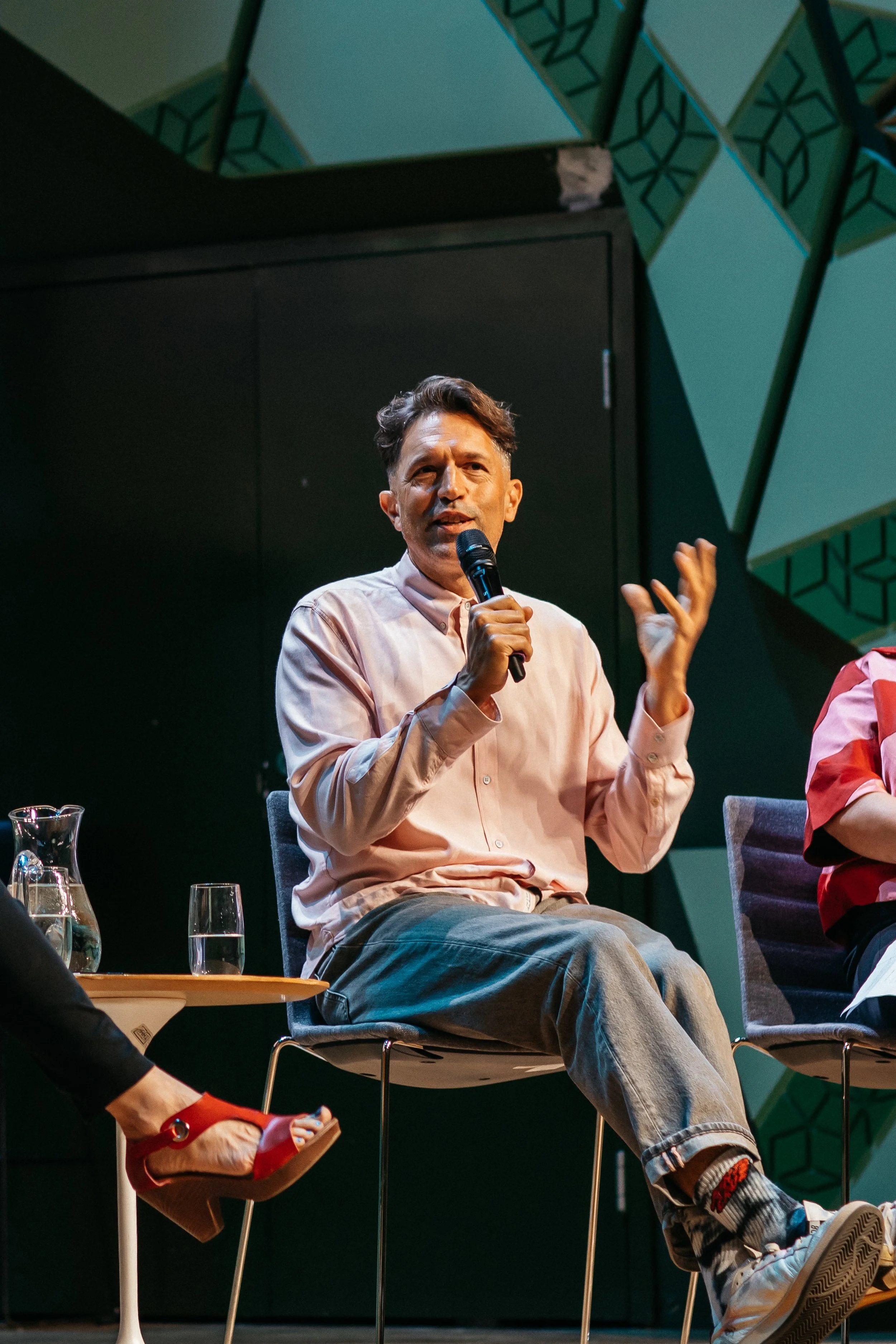
Ben Shewry. Photographer: Marie-Luise Skibbe
Endemic Ingredients
Chef Ben Shewry works in the immediacy of the plate, shaping the experience of food in the upper echelons of culinary artistry.
As owner of Attica, Shewry has built a practice around storytelling through food, dishing up indigenous ingredients peppered with First Nations knowledge.
“The restaurant is a way of bringing people together,” he said.
“I learned from a very young age that food wasn’t just something that you consume… there was culture and people attached to that food.”
Shewry’s ongoing collaboration with Pascoe extends beyond ingredients, reconnecting growing, sourcing, and understanding food within its cultural context.
In Shewry’s kitchen, native ingredients such as quandong, finger lime, and murnong aren’t token cameos but central to the culinary narrative. Transformed with precision and care — a single tuber, pan-fried in brown butter, alchemises decades of refinement.
When asked what might disappear from future diets, Shewry flipped the script. “Wouldn’t it be great if in 50 or 100 years we reversed the last 230 years and returned to Aboriginal foods... That would be really something.”
Yet innovation at the top of the food chain rarely trickles down. For this return to Indigenous cuisine to be meaningful, it must move beyond the exclusive confines of fine dining into everyday kitchens, where what we eat will ultimately be decided.
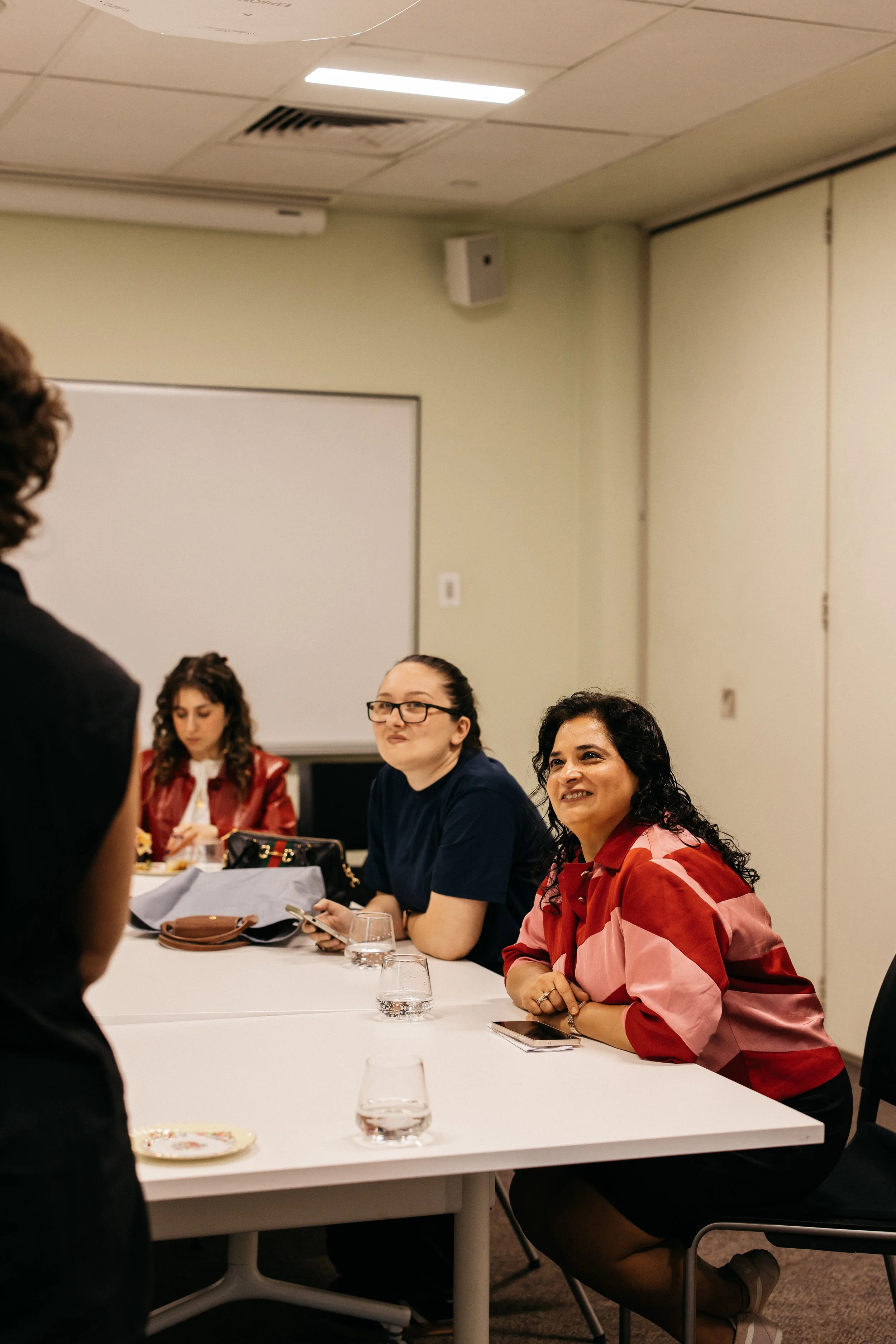
Bhavna Middha (far right). Photographer: Marie-Luise Skibbe
Inside the System
Sustainable consumption researcher Bhavna Middha zoomed out, reframing food as part of a global, interconnected system already pushing beyond planetary limits.
“The food system itself is not siloed," she explained. "We’re part of the system… our everyday practices shape the food systems, as well as the fact that the way food systems are structured and organised shapes our practices.”
Food is deeply entangled in the climate puzzle, from deforestation to transportation emissions, and from packaging to waste.
Australia’s growing reliance on imports — a rapidly expanding portion of what we eat — adds further pressure, embedding emissions into everyday food practices, compounded by overconsumption and food waste.
Middha’s perspective lands close to home — playing out in daily routines through what we buy, waste, and our expectations for year-round availability.
While Pascoe calls for remembering, Middha calls for responsibility — not in the guilt-driven sense — but in recognising that demand, consumption, production, and distribution are inseparable.
Change, Middha suggests, won’t come from pulling a single lever but from shifting the mechanics of the system as a whole — including our place within it.
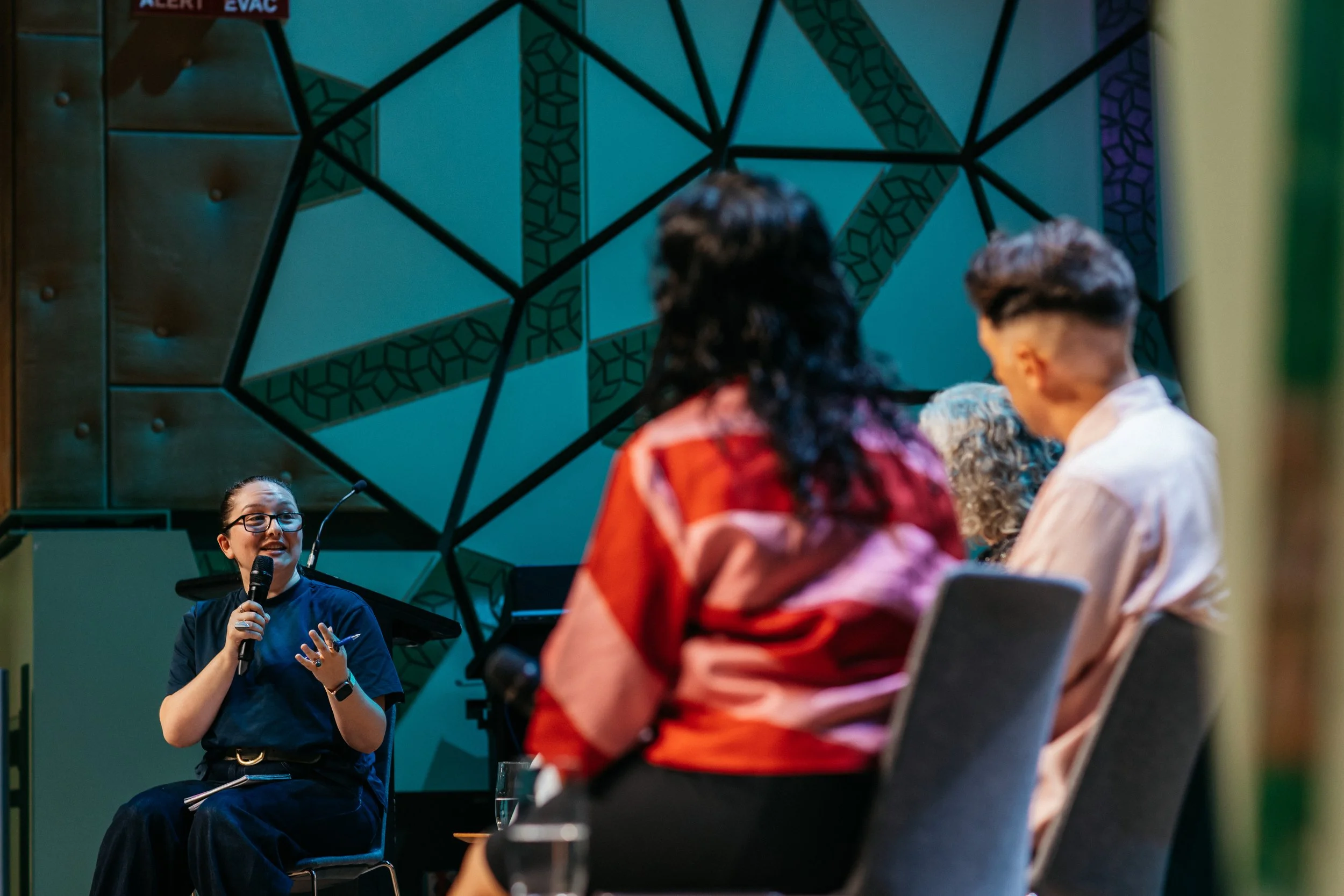
Natalie Jovanovski (far left). Photographer: Marie-Luise Skibbe
Unbalanced Portions
Middha exposed the environmental fissures in our food systems, while sociologist Natalie Jovanovski illuminated its social fault lines.
As a health and social equity researcher, Jovanovski examines the social determinants of diet. Access shapes what — and how well — we eat, revealing the structural barriers that make eating well unevenly accessible.
As our social media algorithms become increasingly saturated with wellness messaging, dietary choices are often framed as personal responsibility — a narrative that glosses over structural realities.
These include the cost of fresh produce, the unbalanced geography of access, and the time required to shop, prepare, and cook. Jovanovski reflected on power, privilege, and our need to rethink how food systems serve different communities.
“People are extremely conscious of finding opportunities for affordable fresh produce,” she said, noting the mental load that comes with it.
“And sometimes I wonder, because it’s so conscious, how sustainable is it as a practice?”
Jovanovski’s research suggests that how we’ll eat must prioritise equity and social justice — but if eating well requires constant vigilance, is it truly accessible?
A fair system would make access to fresh, local, and nutritious food as fundamental as access to clean air, drinkable water, and affordable housing. Not a lifestyle choice per se, but a baseline of healthy food accessible to all.
Across the panel, one thing was clear: shaping a sustainable food future is less a single course of action than a degustation of ideas across landscapes, eras, and disciplines.
It requires integrating deep-time indigenous knowledge, creative adaptation, systemic change, and social equity to transform our diets — and the relationships underlying our food systems.
Harper wove these threads into a fabric covering future food systems, emphasising resource use and distribution as obstacles to the path ahead.
Pascoe was more direct, offering a warning and an invitation. ”We have to think in terms of Mother Earth and what she can sustain… capitalism is saying to us, 'You have to have perpetual growth,’ and we can’t, we just can’t, we have to be sensible.”
Our current systems for nourishment — environmentally, socially, and nutritionally — have already had a gut full. Future-proof alternatives aren't hypothetical; they already exist in abundance through the revival of drought-resistant native crops, the rebirth of regenerative agriculture, and local markets that shorten the distance between grower and plate.
In Victoria, there are 29 regular farmers’ markets that offer a practical reconnection to place — a tangible shift toward bioregional eating that supports local producers, shortens supply chains, and reduces the embodied energy of food systems.
To ensure a sustainable way of eating, we may not need to reinvent the wheel — but we may need to remember how to turn it.
Any future system worth building must first acknowledge the custodians who sustained this continent for millennia. As Pascoe poignantly reminds us, ”You can’t eat our food if you can’t swallow our history."
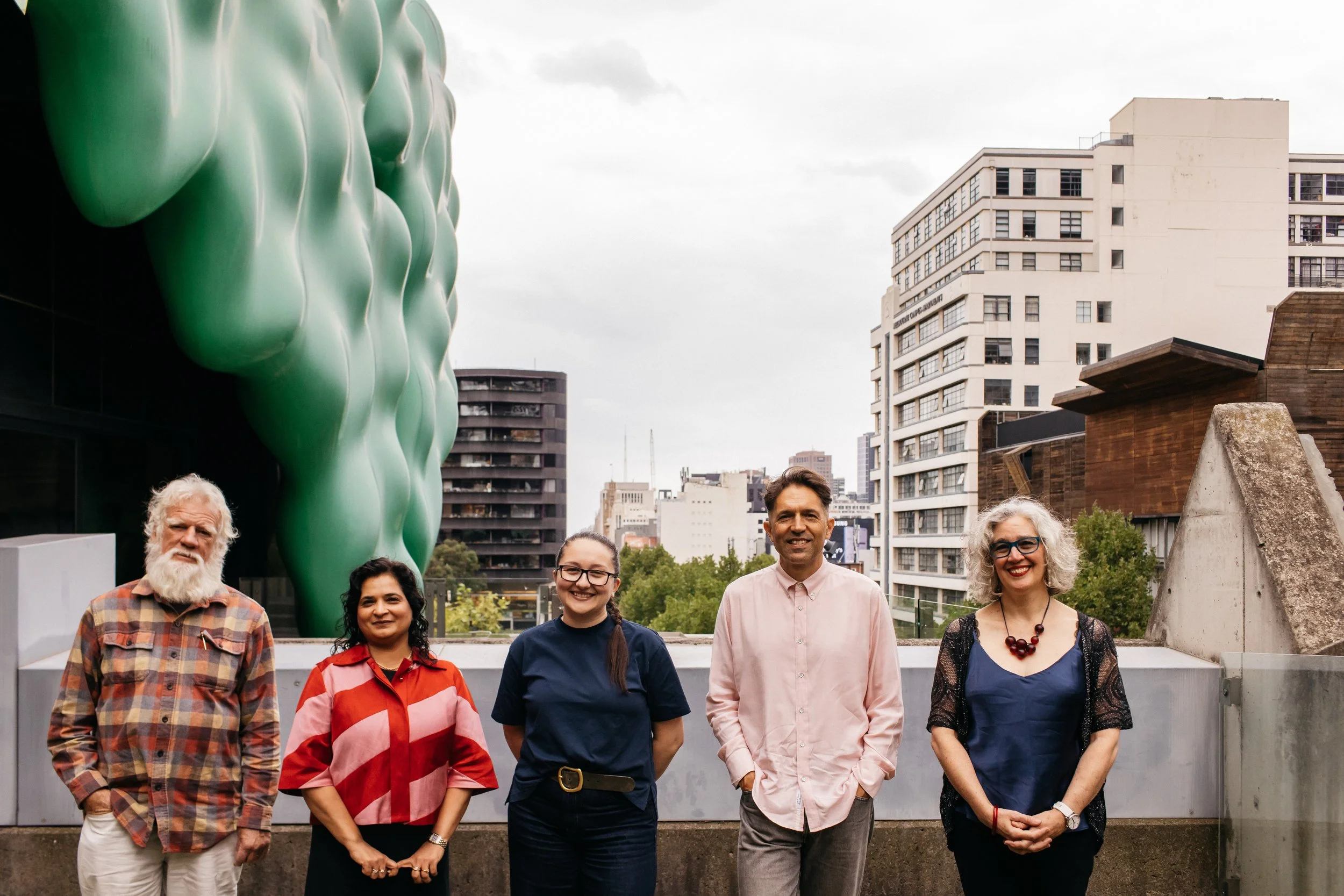
From L to R: Bruce Pascoe, Bhavna Middha, Natalie Jovanovski, Ben Shewry, Hilary Harper. Photographer: Marie-Luise Skibbe
Provocations: What will we eat in the future?
Held on: 1 Apr 2026
RMIT Storey Hall, 336/348 Swanston St, Melbourne
Speakers:
Bruce Pascoe, Aboriginal farmer and writer of literary fiction, non-fiction, poetry, essays and children's literature. His publications have won numerous awards including the groundbreaking, bestselling book Dark Emu.
Ben Shewry, internationally renowned chef, restaurateur, and creative obsessive. Owner of Attica in Melbourne and writer of the books Origin and Uses for Obsession
Bhavna Middha, sustainable consumption scholar and Deputy Associate Director of the Regenerative Environments and Climate Action Theme at RMIT's School of Global, Urban and Social Studies
Natalie Jovanovski, health sociologist and Vice Chancellor's Senior Research Fellow in RMIT's School of Health and Biomedical Sciences and Social Equity Research Centre (SERC)
This event was part of Provocations – RMIT University's Talks and Ideas series.